A raga (or raag) is a melodic framework in North Indian (Hindustani) classical music used for composition and improvisation. Derived from the Sanskrit word for color or mood, it is not a fixed song, but rather a set of rules—specific notes, ascending/descending paths, and emotional characteristics—that serve as a blueprint for a musician’s performance.
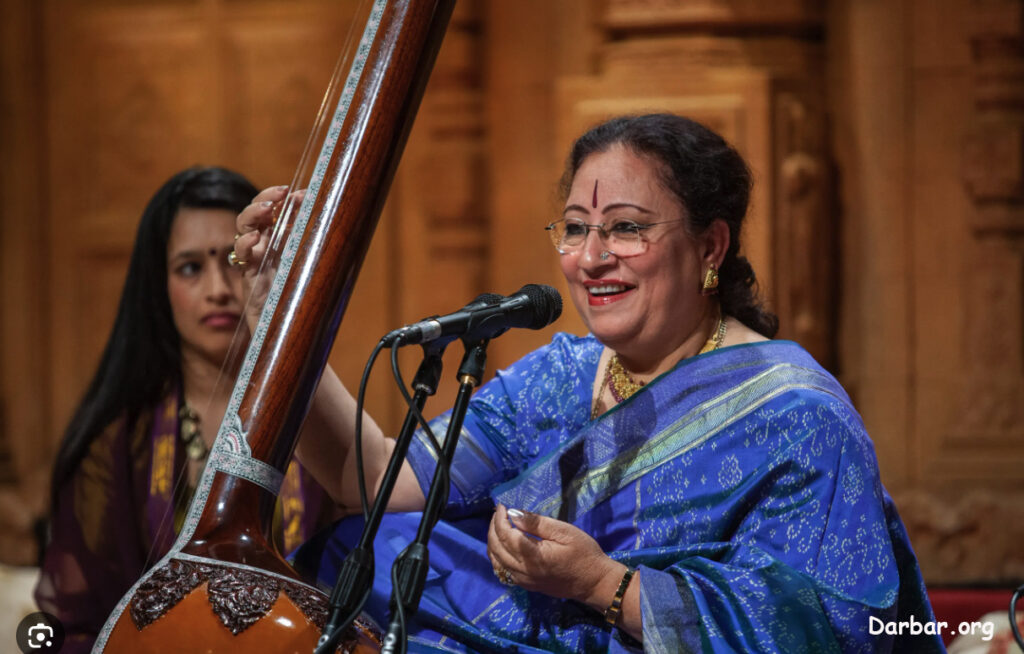
Begum Parveen Sultana - Khayal Vocalist at the Darbar Festival in the Phoenix Theatre in Leicester
Raga
“The study of the melodic tradition of North Indian classical music, called raga, is a primary educational necessity for 21st century musicians and composers” – Don Robertson
Raga is a melodic concept almost completely unknown in our culture. A raga is a blueprint for composing and improvising melody. The best way that I know how to describe what a raga is to Western musicians is to equate it to the “blues”. To learn to play or sing the blues, a musician or singer not only learns a scale, because there is much more to singing or playing the blues. For example, there are the blues form, a twelve-bar repeating pattern of chords, embellishment notes, and riffs. One learns blues by listening to great blues recordings. The same is true for learning ragas. Learning a single raga is like learning the blues. But once you know that raga, like knowing the various possibilities of the blues, you will be able to sing or play it, and you will recognize it when singers and musicians from India are performing it. (Don Robertson)
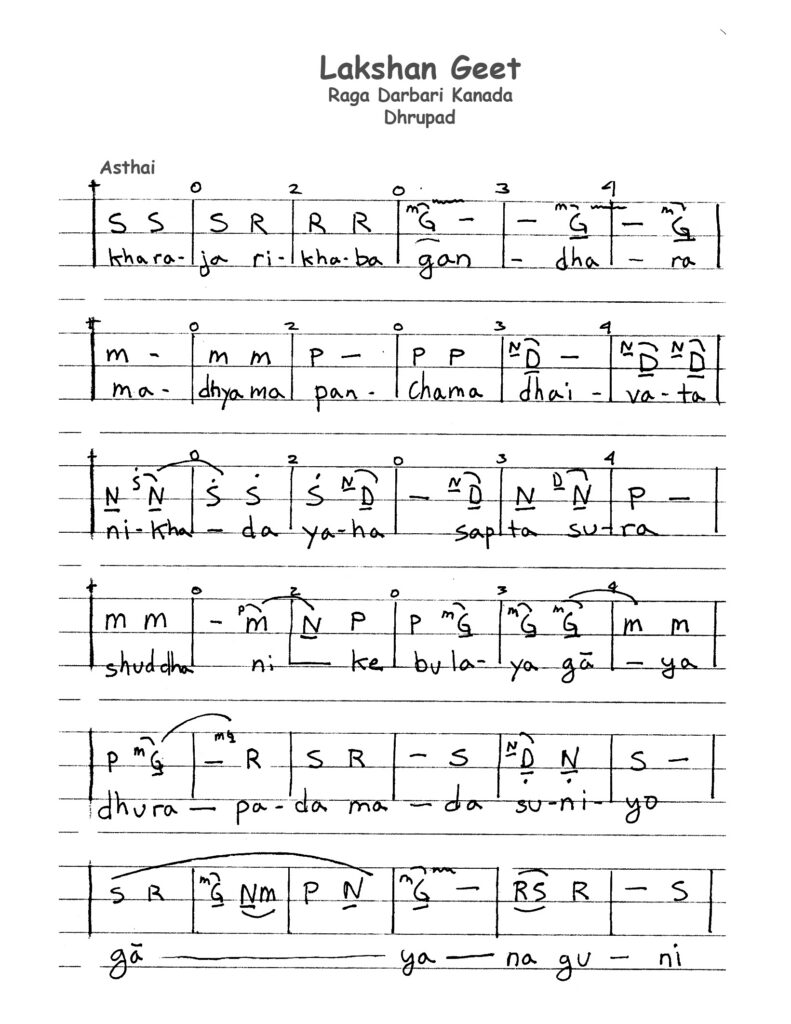
Lakshan Geet (student song) in Raga Darbari Kanada - Asthai
Ragas Bharavi, Bhairav, Bilaskhani Todi, Komel Re Asawari, and Suha Kanada
Afternoon Ragas
Ragas Brindavani Sarang, Desh, Miya Ki Mahlar, and Sughrai Kanada
Evening Ragas
Ragas Bageshri, Yaman Kalyan, Bhupali, and Kedar
Night Ragas
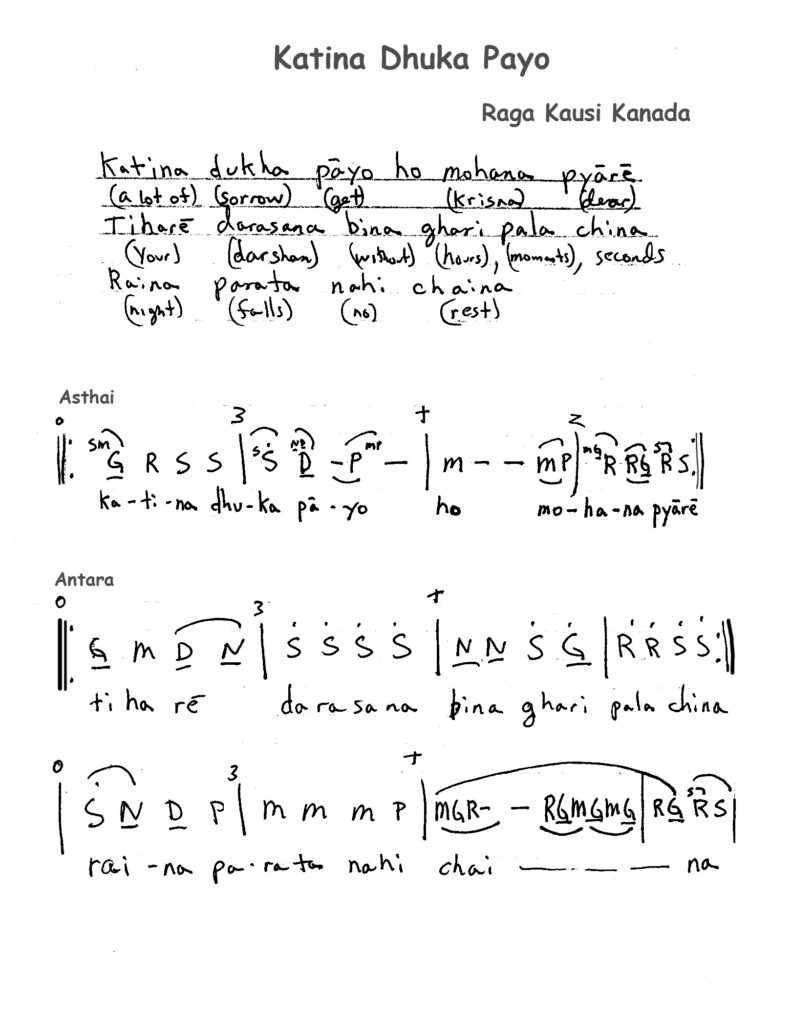
Ragas Malkauns, Kausi Kanada, Darbari Kanada, and Adana
Listen to an Example of Each Raga:
Morning Ragas
Afternoon Ragas
Evening Ragas
Night Ragas
Raga Studies
RS-0001 – The Morning (250 pages)
RS-0002 – The Afternoon
RS-0003 – The Night (370 pages)
RS-0004 – The Kanada Ragas
RS-0005 – The Seasonal Ragas (138 Pages)
RS-0006 – Pentatonic Ragas (160 pages)
Videos
About Ragas
About Scrutis
In North Indian (Hindustani) classical music, shruti refers to the smallest microtonal interval of pitch that the human ear can detect and a musician can produce. While the Western music scale divides an octave into 12 equal semitones, the traditional Indian musical system theoretically divides the same octave into 22 shrutis. Swara is the broader, macro-note (like Sa, Re, Ga, Ma) used to build melodies. While there are 22 shrutis, a swara is a specific point along that 22-shruti spectrum.
Ragas Morning, Noon, and Night
The Dhrupad Style
Dhrupad is the oldest surviving form of North Indian (Hindustani) classical vocal music. Known for its meditative, spiritual, and deeply deliberate nature, it focuses on the precise intonation of notes, breath control, and the pure, unadorned exploration of a musical scale rather than fast, ornamental acrobatics.
Long-Playing Record Albums – Vocal Music
Pandit Omkarnath Thakur Side Two – Raga Malkauns
Dagar Brothers (Elder) Raga Darbari Kanada & Adana
Thumriyan is an album of thumri performances by six female singers.
Songs by the important Kirana-vocal-gharana singer Abdul Karim Khan
Ragas yaman and Bairagi-Bhairav sung by Niaz Ahmed & Fayyaz Ahmed Khan
Ragas Ramkali and Bageshri sung by Hirabai Barodekar.
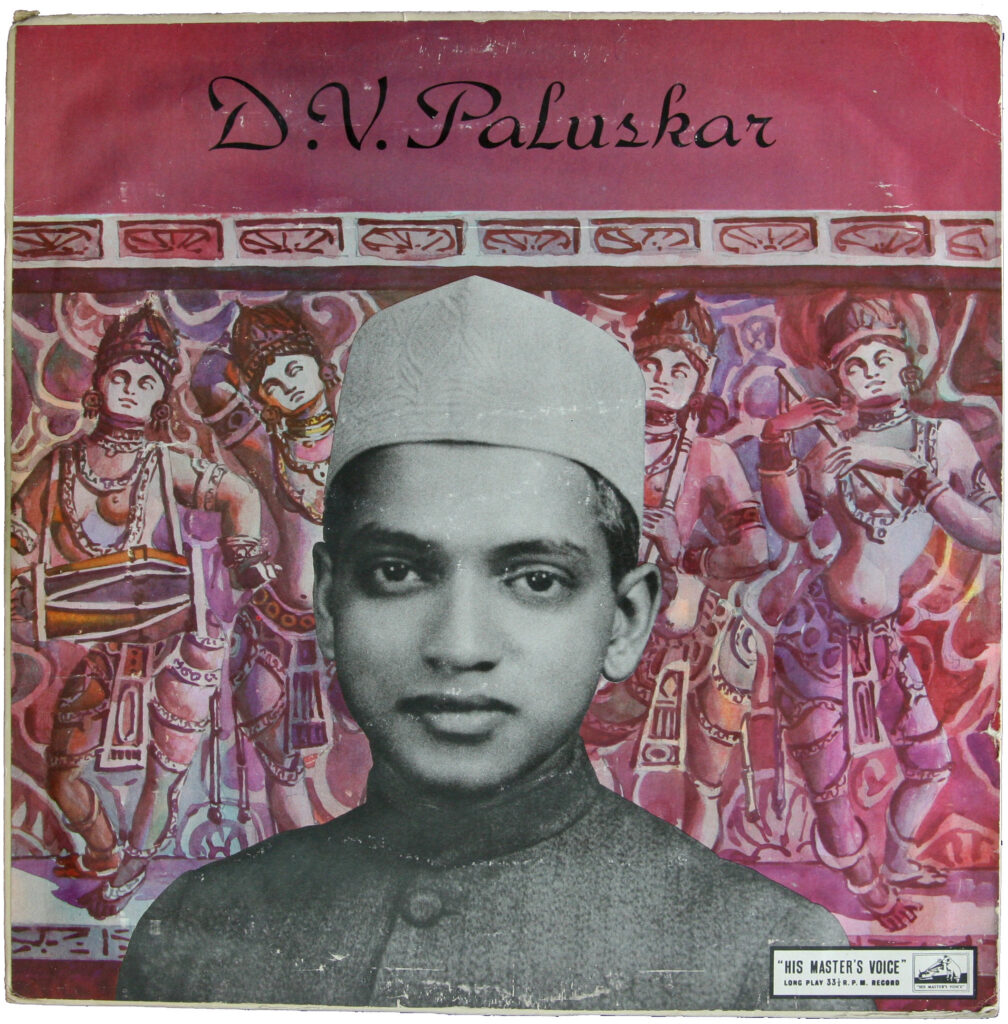
D. V. Paluskar sings bhajans and Raga Shri. He died in 1955 at age 34.
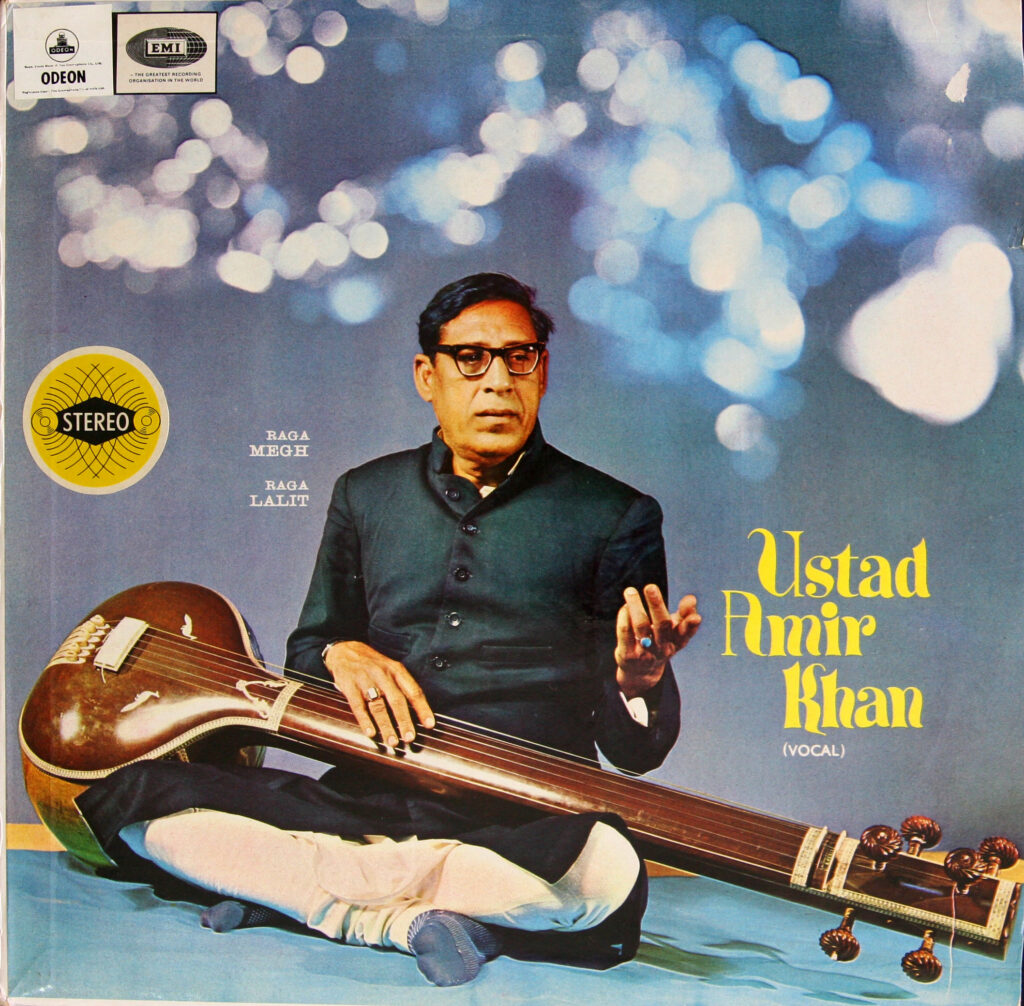
The famous singer Ustad Amir Khan sings ragas Megh and Lalit.
Raga Darbari Kanada
Raga Darbari Kanada (often referred to simply as Darbari) is one of the most majestic and profound ragas in Hindustani classical music. Traditionally believed to have been created in the 16th century by the legendary court musician Miyan Tansen to soothe the Mughal Emperor Akbar, its slow, resonant phrasing evokes a deep, meditative, and regal atmosphere. Known as the “Emperor of Ragas”, Darbari is characterized by deep poignancy, majesty, and vairagya (detachment). It evokes feelings of profound solemnity and mystical devotion.
Ameer Khan Side Two – Raga Darbari Kanada
Nazakat Ali and Salamat Ali (The Ali Brothers) Side One – Raga Darbari Kanada
Learn more about Raga Darbari Kanada on Musical Kaleidoscope – – >
Pandit Rajan Mishra and Pandit Sajan Mishra were acclaimed brother-duo vocalists of the Khyal style in Hindustani classical music. They represented a 300-year-old musical lineage belonging to the prestigious Banaras Gharana. Regarded as titans of Indian classical music, they were jointly awarded the Padma Bhushan (one of India’s highest civilian awards) in 2007. The elder brother, Pandit Rajan Mishra, passed away in 2021.
Ustad Ali Akbar Khan
I began studying with Ustad Ali Akbar Khan in December, 1967. There is no way that I can convey what it was like being with him, listening to his stories, and most importantly, listening him playing the sarod. It was one of the great experiences of my life. (Don Robertson)