The iUniversity
Section Four
The Great String Era (1680-1750)
The Great Italian 18th Century String Era
Lorem ipsum dolor sit amet, consectetur adipiscing elit. Ut elit tellus, luctus nec ullamcorper mattis, pulvinar dapibus leo.
IT BEGAN IN THE 17th bolognese school. Torelli.
Context regarding Op. 6 in Bologna
While Torelli is heavily associated with the Bolognese school and the basilica of San Petronio, his Op. 6 (Concerti musicali) was actually published in Augsburg, Germany, in 1698 during his tenure at the court of Brandenburg-Ansbach. These twelve concerti are considered transitional works between the contrapuntal trio sonata and the ritornello-driven concerto, marking them as important, though not as “Bolognese” in origin as his trumpet sonatas or his later Op. 8.
- Structure of the Concerto: Torelli’s experimentation with form, especially in his Opus 8 (published 1709), provided a model of three movements (fast-slow-fast) that influenced the evolution of the concerto grosso and solo concerto, which Corelli popularized.
- Melodic Clarity: Torelli moved away from dense polyphony, favoring clear, melodic lines and regular cadences, a style that aligned with the emerging Baroque preference for melodic focus.
- Synthesis of Style: Corelli’s works in Rome synthesized various Italian styles, including the Bolognese school—to which Torelli belonged—known for its technical and expressive violin writing.
- Parallel Development: Both composers were key in defining the concerto grosso (dialogue between concertino and ripieno), with their works often studied in tandem as the foundation of the genre. Reddit +4
- Composition Period: While the exact dates vary, they were written over a long period, likely beginning in the 1680s and finalized by the early 1690s.
- Performance/Publication: Although composed around 1690, they were not published until 1714, a year after Corelli’s death in 1713.
- Significance: The collection, commissioned by Cardinal Pietro Ottoboni, includes 8 concerti da chiesa (church) and 4 concerti da camera (chamber).
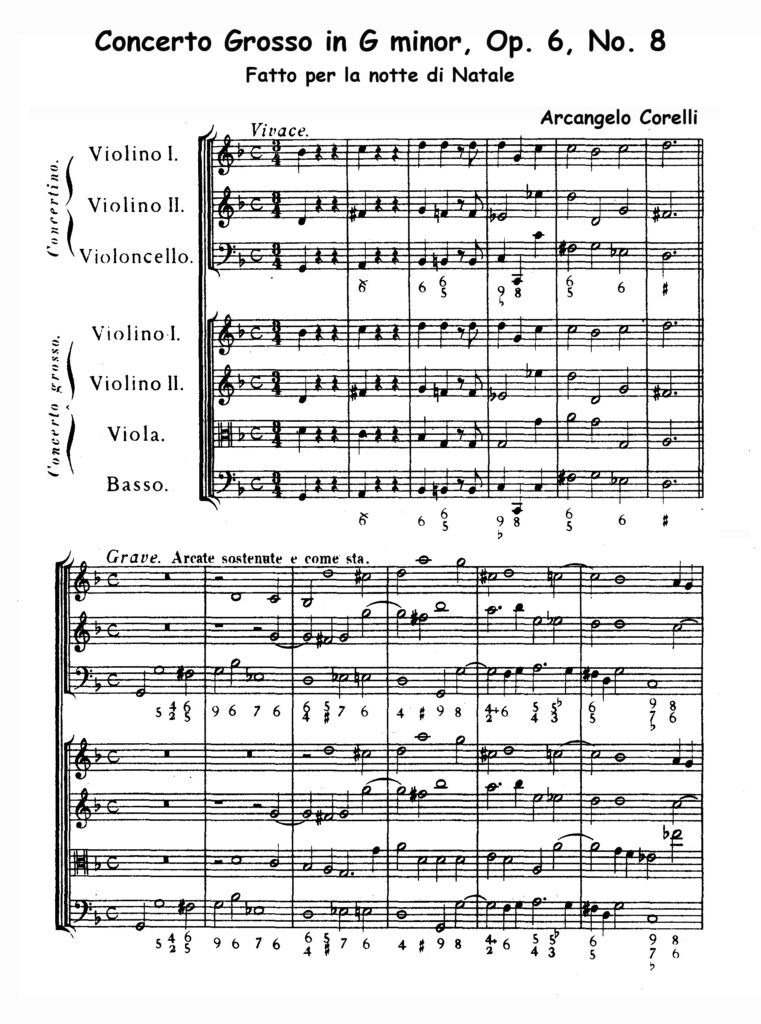
- “Christmas Concerto”: No. 8 in G minor (the “Christmas Concerto”) was specifically created for performances on Christmas Eve, with records of it being performed around 1690.
Scores
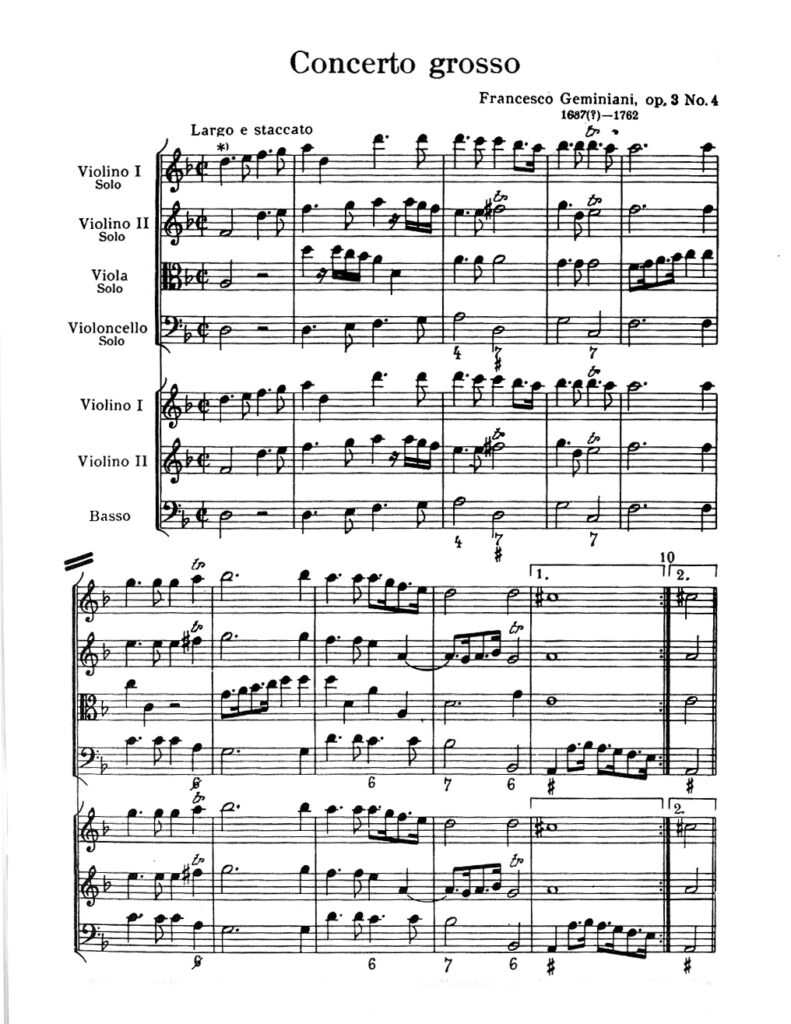
Op. 3, No. 4 - Page One
"The Christmas Concerto" - Page 1
ME-001 – The Great String era – Concerti Grossi – Volume 1 (232 pages)
Christmas concerti, Torelli, Gregori, Corelli,
Mascitti, Scarlatti
ME-002 – The Great String era – Concerti Grossi – Volume 2 (265 pages)
Geminiani, Locatelli, Manfredini, Handel
ME-003 – The Great String era – Sonate a Tre
Torelli, Corelli, Locatelli, Caldara.
Tesserini
ME-004 – The Great String era – Sinfonie and Sonate per Solo (250 pages)
Albinoni, Brescianello, Pergolesi, Stradella,
Vivaldi, Locatelli, Mascitti, Corelli, Caldara
ME-005 – The Great String era – Concerti (260 pages)
Albinoni, Cattameo, Dall’Oglio, Durante, Guido,
J.S. Bach, Locatelli, Marcello, Pergolesi, Pez,
Pisendel, Tartini, Vivali
Study Scores
MJ-004 – Great String Era Concerto Study (210 Pages)
Torelli, Geminiani, Vivaldi
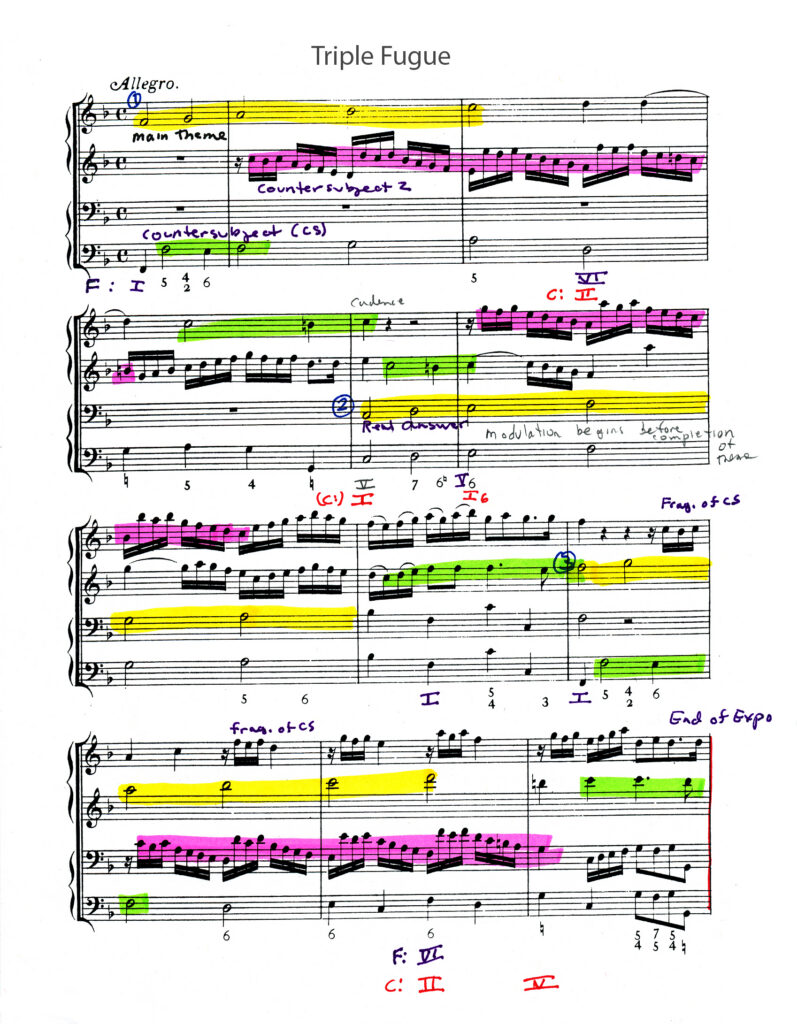
MJ-005 Arcangelo Corelli Opus 1 with fugues marked (80 pages)
Videos
Visit “The Great String Music Era” playlist on Musical Kaleidoscope YouTube – – >