
The Seeds of the Renaisance
by Don Robertson (2016)
The fact that classical music thrived before the time of Johann Sebastian Bach (who died in 1750) has not been generally understood nor accepted. We have been erroneously taught that we have always advanced culturally through time, and this has moved us further and further away from the spiritually rich consonant harmony of the Renaissance, finally plunging us into the polluted waters of discordant harmony, the so-called “modern” music that arose during the troubled 20th century, along with “modern” art, and “modern” architecture.
Dark and Golden Ages
After the fall of the Roman Empire in the fifth century, Europe entered a period that has been referred to as the dark ages. That term has been rejected by probably most modern historians, but I use it to describe the period from the 5th through the 9th century.
The beginning of the seeding of the Renaissance began in the 10th century. Following this, there were terrible famines and plagues during the 13th century, and the Black Death of 1348 took out about half or more of Europe’s population.
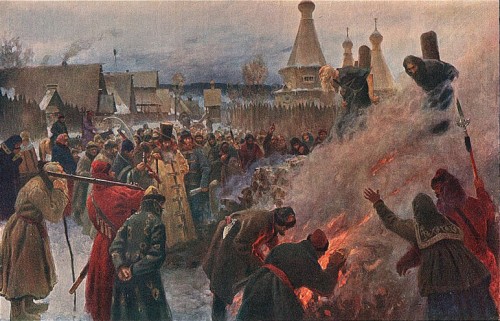
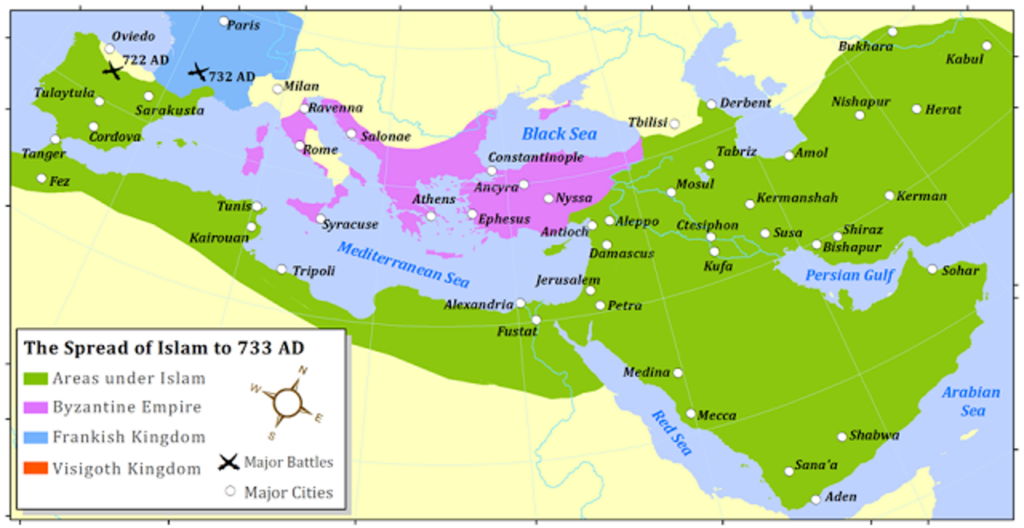
The brutal Muslim invasion forces that conquered so many countries and enslaved, raped, and murdered so many people on one hand, seized and brought back to Baghdad important manuscripts and books on the other. These treasures of knowledge then were translated into Arabic and studied in places like the “House of Wisdom“, an important cultural center in Baghdad.
The House of Wisdom was a center for science, mathematics, astronomy/astrology, medicine, alchemy/chemistry, zoology, geography, and cartography. The main texts that were studied were from India and Greece, but Syriac and Persian texts were also delved into. By the middle of the ninth century, the House of Wisdom housed the largest selection of books in the world.
A new writing system and the introduction of paper from China had facilitated the assimilation of the world’s great knowledge. Islamic scholars had translated all of the important texts that they had found into Arabic. These included the extremely important works by the ancient Greeks. They further developed this knowledge, creating the great body of philosophy, art, poetry, astronomy, mathematics, music, medicine, and science.

To the East, the brutal Muslim conquest of India witnessed a terrible bloodbath of slaughter and rape. 15th-century Indian historian Firishta wrote that 400,000,000 Hindus had been killed in this awful vanquishing. But the merging of cultures will bring about another great music tradition. This occurred during the reign of Akbar the Great who ruled a large area of Northern India during the entire second half of the 16th century.
Akbar believed in merging the ancient Hindu culture already present in India, a culture that was most likely based on pre-antediluvian knowledge, with the mystical side of Islam called Sufism that had been introduced by Islamic invaders. This fusion of cultures resulted in the great classical music of North India that I cover HERE and HERE.
A blossoming of new music spanned the second half of the 16th century simultaneously in North India and in Europe, resulting in the creation of two of the greatest of music traditions of our planet.
Al-Andalus
In 711, a force of Berber soldiers entered the Iberian peninsula from North Africa, drove out the Visigoths who had maintained a kingdom there, and established the state of Al-Andalus. This Islamic state consisted of today’s Spain, Portugal, and Andorra, and also included a portion of Southern France for a time.
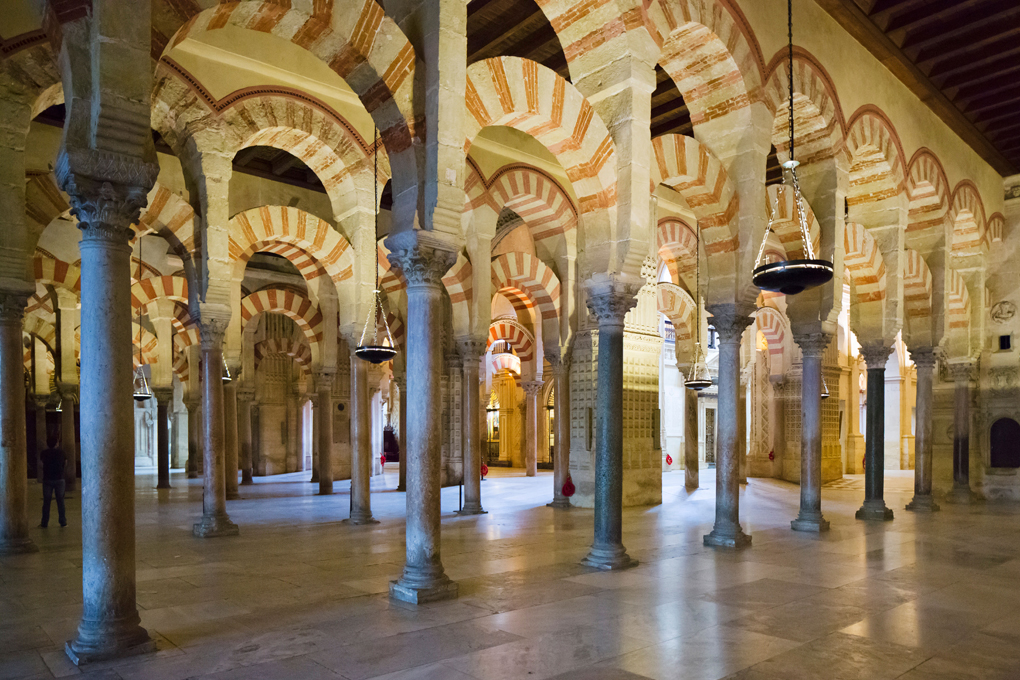
While turmoil and darkness ruled Europe, the glorious Islamic Golden Age spread to Al-Andalus from its center in Baghdad, and it flourished there. The capitol of Al-Andalus’ was the beautiful city of Cordoba, where homes supplied with running water lined paved street-lighted roads, and where food was wholesome and plentiful.
The Libraries
Al-Andalus had over 70 libraries. The royal library in capitol city of Cordoba held hundreds of thousands of books, and at one time employed 500 people. Its catalogue alone consisted of 44 volumes. Muslim armies had taken control of many great cities in their path of conquest. The libraries in these cities were raided and books containing knowledge and poetry were taken back to Baghdad to be translated into Arabic. These Arabic translations soon made their way into the libraries of Cordoba. Thus Islamic scientists and scholars gained a fantastic knowledge of philosophy, science, medicine, music, and mathematics, continuing to further develop these subjects.
Meanwhile in Europe, all cultural vestiges of the Roman Empire had disappeared and availability of ancient texts was almost non-existent. Books that had been preserved in monastery libraries were closely guarded, barred from availability to outsiders.
After the fall of Cordoba in 1032, books from the city’s libraries were transferred to the city of Toledo, where culture continued to flourish. When the Christian King Alfonso VI of Castile invaded Toledo from the North in 1085, he recognized that Toledo had become a great center for science, medicine, astronomy, music, poetry, and the arts. Instead of pillaging the great city, he allowed it to continue flourishing, encouraging the Islamic culture to further expand. Toledo thus became a great center of culture and learning.
The Toledo School of Translators
During the 12th and 13th centuries, groups of Jewish, Muslim, and Christian scholars who were collectively known as the Escuela de Traductores de Toledo (the Toledo School of Translators) worked tirelessly translating the great philosophical and religious works contained in Toledo’s libraries from Arabic into Latin and finally into Castilian, the later helping to establish the foundation of the modern-day Spanish language.
The texts of the ancient Greek Philosophers, mathematicians, and scientists, including among them the works of Plato, Aristotle, Hippocrates, Galen, Ptolemy, and Pythagoras were carefully translated from Arabic to Latin, the formal language of Europe.
Toledo was a remarkable center for learning. The city attracted scholars from not only the Muslim world, but from Europe as well. They poured into Toledo from England and Europe to study. These scholars then returned to their own countries with their newly found knowledge. This led to the expansion of knowledge in Europe and the development of three great universities: Oxford, the University of Paris, and the University of Bologna.
During the 11th and 12th centuries many scholars, including the important mathematicians Leonardo Fibonacci from Italy and Michael Scott from Scotland. They travelled to Al-Andalus to learn advanced mathematics. The works of the Islamic mathematician, philosopher, and musician Al-Farabi and Persian polymath Ibn Sīnā (also known as Avicenna), now translated into Latin, were used in works by such middle-age writers as Roger Bacon, Walter Odington, Jerome of Maravia, and Vincent de Beauvais.
The fuel for what would become the Renaissance was pouring into culture-starved Europe from the advanced Islamic culture thriving in Toledo. Of utmost importance was the arrival of Latin translations of the classical texts of ancient Greece – Plato, Aristotle and Pythagoras.
Music Flows from Al-Andalus
The origin of the sacred choral music of the Renaissance lies in the singing of the liturgy, the so-called Gregorian chant that was developed beginning about 750 from a synthesis of Roman and Gallican liturgical chants. Gregorian chant consists of a single musical melody sung in Latin (except in a few cases where Greek words are used) by church or monastic cantors and choirs in the performance of services.
Organum
From the Gregorian chant, a new two-voice style called organum arose. The oldest document that we have that discusses the singing of organum is the Musica enchiriadis from the year 895. In organum, another voice was added, creating two separate musical lines that were sung together. The new voice is an embellished melody that is sung over the sustained notes of the original Gregorian chant melody. This feature represents the beginning of multi-voice singing and a 700-year era that I call the Polyphonic Music Era.
The construction of Notre Dame Cathedral on the Île de la Cité in Paris took place between 1163 and 1238. Organum was sung there, and it was the 12th-century center of music for Europe. To commemorate that fact, special performances of organum are performed in the cathedral from time to time.
Organum introduced the added simultaneous musical line that was sung above the single-line Gregorian chant melody, and from there more lines will be added to create the multipart texture of Renaissance sacred music.
My question is, what inspired this introduction of organum in the 9th century?
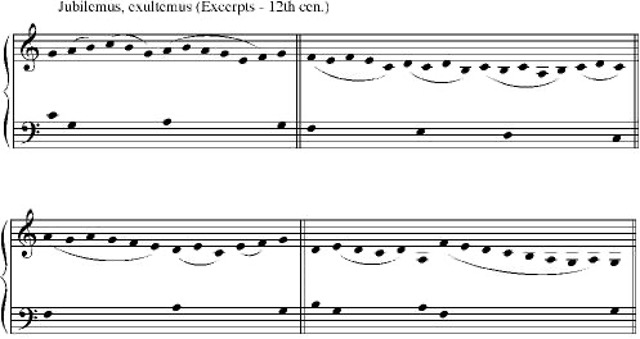
In a 2004 paper called The Arab Contribution to the Music of the Western World by Rabah Saoud, the author presents the idea that organum was the result of islamic influence from the advanced culture in Al-Andalus. We have no proof of this, but I began suspecting this myself decades before this paper was written, and so I mention it here.
A point that Mr. Saoud presents for our contemplation is the similarity between the so-called solfege symbols of the European tradition (“Do a deer, a female deer, Re…” etc. featured in the popular The Sound of Music). He sites a French scholar named Laborde, who in 1780 asserted that the western system of scale-note identification called solfege (DO, RE, ME, FA, SO, LA, TI) demonstrates a strong resemblance to some of the letters of the Arabic alphabet (DAI, RA, MI, FA, SAD, LA, SIN).
This may be a stretch; however, the solfege representation for our scale (C-Do, D-RE, E-MI, F-FA, G-SO, A-LA, B-TI) is also remarkably consistant with the ancient sargam scale-note identification system of India that dates back to somewhere in the 6th to the 8th century and is in common use in India and Pakisthan today (C-SA, D-RE, E-GA, F-MA, G-PA, A-DHA, B-NI). Now, that is pretty conclusive evidence of similar origins for two systems, the European solfege, and the Indian sargam:
Do Re Me Fa So La Ti
Sa Re Ga Ma Pa Dha Ni
Early 11th-century Italian music theorist Guido da Arezzo is considered to be the inventor of the modern musical staff notation. He is known today for this famous illustration of a hand that was published to provide a method for singers to learn to read the notes in choral-music part books:
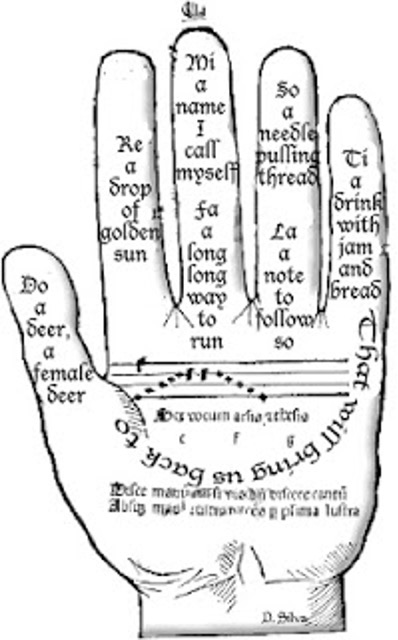
In his manuscripts, Guido used the syllables UT RE MI FA SO LA to describe the notes C D E F G A. These are also the syllables from the first six lines of the Gregorian hymn “Ut queant laxis”, whose Latin words have been ascribed to the 8th-century Benedictine monk Paulus Diaconus. Scholars have assumed that Arezzo invented the solfege system and based the names of the six letters on the first syllables of the first six lines of the hymn, but for me, the similarity between the solfege system East and West betrays this idea. We must now consider that the solfege system could have been adopted from islamic influences during the 8th century, possibly inspiring the hymn text by Diaconus.
In his above mentioned paper, Rabah Saoud goes into some detail about this issue, beginning with the statement that Muslim influence on musical theory is strongly denied by Western scholars. He suggests that Muslim musicians used music notation as early as the 8th century. He also points out that the Spanish author Soriano Fuertes, in his Hitoire de la musica Espanola, states that Guido had studied in Catalonia, which bordered on Al-Andalus.
And so, we see the connections between the Islamic influence from Al-Andalus and the beginnings of Renaissance sacred choral music. For me, this influence is obvious. One culture influences another. This is not unusual, especially when one culture is coming out of a decline and the other is beginning a descent. The Islamic influence on Renaissance art, architecture, science, mathematics, and medicine has been well established. Not much has been written about the Islamic influence on music, however.
Renaissance Musical Instruments
The Lute
The Oud
The Lute
The Guitar
The Spanish guitarra (the guitar) was the Andalusian qitara (قيثارة) – itself derived from the Latin cithara, which in turn came from the ancient Greek instrument called the kithara (also cithara, and κιθάρα in Greek).
The Spanish guitar is used in Flamenco dancing and music – a style derived from Andalusian and gypsy music and dance.
The Cithara
The Guitar
The Violin
The Rebab
The Rebec
Contemporaneous with the rebec, European luthiers developed the vielle (the medieval fiddle). While related to the rebec/rabab, the vielle typically featured a flat wooden back, lateral tuning pegs, and a carved-out neck with a fingerboard. The rebec provided a structural foundation for later European instrument makers. It was played alongside or replaced by other bowed string instruments, most notably the vielle and the lira da braccio. These instruments developed the familiar arched soundboards, sound posts, and f-holes that paved the way for the violin family that emerged in early 16th-century Italy, borrowing the fretless neck and string configuration (tuned in fifths) of the rebec, while adopting the larger, hourglass-shaped body seen in other Renaissance fiddles.
The Vielle
The Violin
Addendum
Al-Farabi Meets King Suffudeen
Originally published in Kosmon by Don Robertson, 1970
This is a fascinating tale about the great scientist, musician, and philosopher of the Islamic Golden Age, Al Farabi. This tale that I discovered in my 1967 research in the giant New York City Public library gives us a glimpse into the world of Islamic high culture:
Al-Farabi (870-950 A.D.) was the great philosopher and musician from Turkestan who invented two musical instruments: the quanun and the rebab. He documented and refined both in his landmark manuscript, Kitab al-Musiqa al-Kabir (The Great Book of Music).
Al-Farabi was known to travel to many parts of the world, always assuming a disguise so as not to be recognized.
One day, when he was in India, he appeared in the throne room of the court of the great King Suffudeen, one of the most knowledgeable men in India. Al-Farabi had dressed himself as a private in the King’s own army. The king was surprised to see a private standing in his royal room. He demanded the private to explain what he was doing there.
“Where do you belong, private,” he demanded.
“Why, I belong there on the throne, where you now sit!” the private exclaimed, walking up to the throne and seating himself on the edge. He then began pushing his weight against the king, sliding him aside until each occupied half the throne.
The furious king turned to one of his guards and began speaking a very obscure tongue that only a few people could understand. He told the guard “This man must either be a fanatic, or else he is someone very amazing. I will ask him some questions and see which case it may be.”
The king turned to Al-Farabi to ask him a question. However, before he could open his mouth, Al-Farabi spoke to him in the same obscure language and said, “But king, why would you bother?”
At this point, the king and Al-Farabi launched into a lengthy philosophical debate that lasted for several hours. Point-by-point, the king’s arguments were defeated. The wisest men in India were then brought in to contribute to the debate, but one-by-one, they were defeated also. Finally, the king graciously accepted his defeat and told Al-Farabi that he would willingly give him whatever he wished. Al-Farabi said that he wanted nothing. So the King ordered his fine court musicians, who were the best in India, to play for the now-honored guest.
When the musicians began playing, Al-Farabi stopped them to correct their intonation and their interpretation of the ragas. He then demanded that the musicians replay the music correctly. This kept on occurring. Every time that the musicians tried to play, Al-Farabi stopped to correct them. After a while, the king dismissed the musicians and then told Al-Farabi that since he had treated his musicians in such a manner, he must now prove his own musical ability.
Al-Farabi pulled three small reeds from his pocket and began playing a high-register happy tune that when played over and over made everyone in the courtroom, including the king, break out in laughter. Finally everyone in the court, including the king, were rolling on their sides in fits of uncontrollable laughter.
Suddenly Al-Farabi suddenly stopped playing the tune and then began playing another, a slow mournful one that put everyone to sleep, and when all of the people in the room, except Al-Farabi, were fast asleep in their chairs or on the floor, Al-Farabi quietly slipped out of the throne room, never to be seen there again.