A tabla is a pair of hand drums from the Indian subcontinent that are somewhat similar in shape to the bongos. Since the 18th century, the tabla has been the principal percussion instrument in North Indian (Hindustani) classical music, where it may be played solo, as an accompaniment with other instruments and vocals, or as a part of larger ensembles. It is frequently played in popular and folk music performances in India, Bangladesh, Afghanistan, Pakistan, Nepal, and Sri Lanka. The name tabla likely comes from tabl, the Arabic word for drum. The ultimate origin of the musical instrument is contested by scholars, though some trace its evolution from indigenous musical instruments of the Indian subcontinent.
The tabla is also an essential instrument in the bhakti devotional traditions of Hinduism and Sikhism, such as during bhajan and kirtan singing. It is one of the main qawwali instruments used by Sufi musicians. The instrument is also featured in dance performances such as Kathak. Tabla is a rhythmic instrument. The name tabla likely comes from tabl, the Arabic word for drum. The ultimate origin of the musical instrument is contested by scholars, though some trace its evolution from indigenous musical instruments of the Indian subcontinent. The tabla consists of two small drums of slightly different sizes and shapes. Each drum is made of hollowed-out wood, clay or metal. The smaller drum (dayan/tabla) is used for creating treble and tonal sounds, while the primary function of the larger drum (baya/dagga) is for producing bass. They are laced with hoops, thongs and wooden dowels on their sides. The dowels and hoops are used to tighten the tension of the membranes for tuning the drums. The playing technique is complex and involves extensive use of the fingers and palms in various configurations to create a wide variety of different sounds and rhythms, reflected in mnemonic syllables (boles). (Wikipedia)
Talas
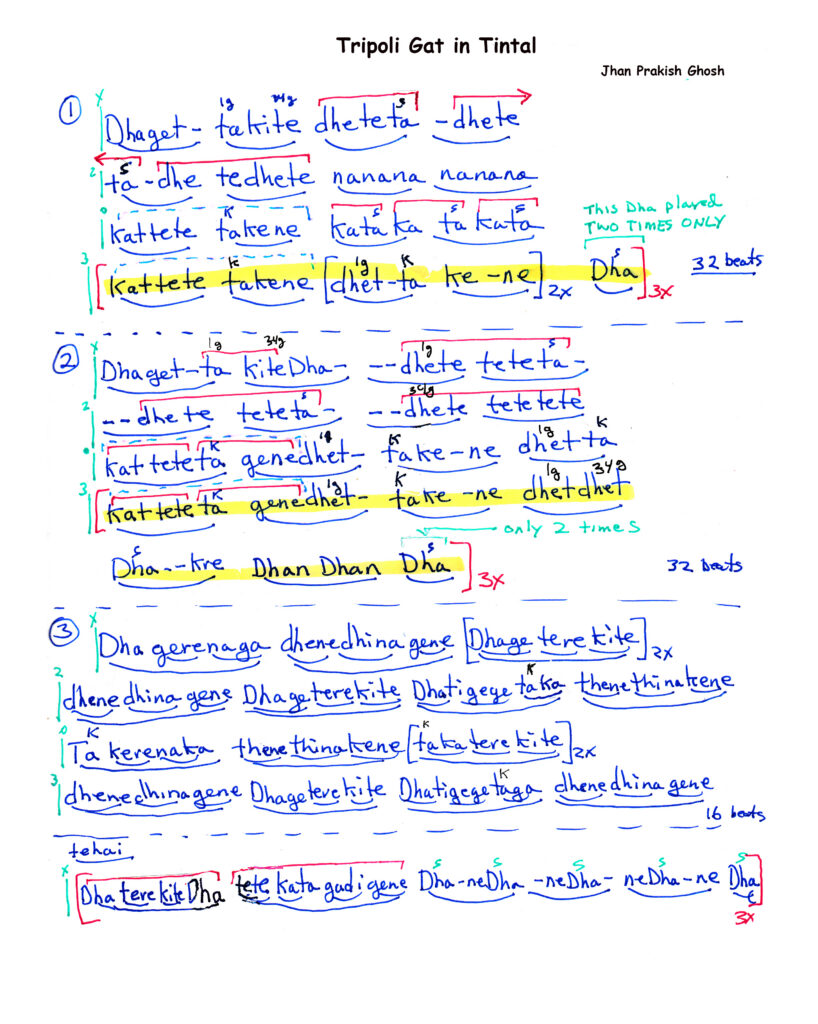
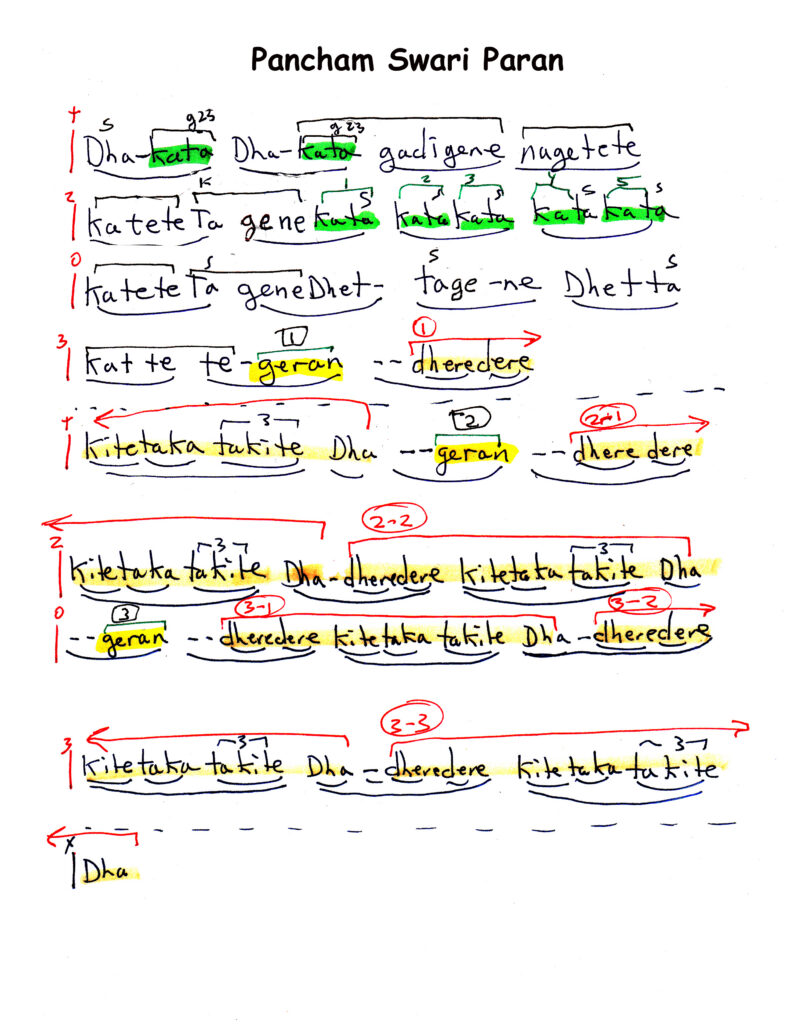
In North Indian (Hindustani) classical music, a tala (or taal) is a repeating rhythmic cycle that provides the rhythmic structure for a musical piece. Just as a raga provides the melodic framework, a tala provides the temporal framework, measuring time in rhythmic loops, mostly ranging from 6 to 16 beats. The most common talas in the tabla classical-music tradition are Ektal (12 beats), Tintal or Teental (16 beats), Jhaptal (10 beats), and Ropak tal (7 beats). Ektal and Jhoomra tal are often found in keyal vocal music. Ashtamangal and Mahesh are older talas that are performed and taught by tabla master Pandit Swapan Choudhuri. The “sawari” talas (Chartal Ki Sawari and Pancham Sawari) are odd-number-beat talas that employ a special 3-note pattern (the sawari) at the end (8+3 and 12+3).
There are six widely recognized gharanas (lineages or stylistic schools) of tabla in Indian classical music. Each represents a distinct geographical origin, unique finger techniques, and a specific repertoire of rhythmic compositions.
The six primary tabla gharanas are:
Delhi Gharana: The oldest of the gharanas. It is known for its graceful, two-finger playing technique, rhythmic clarity, and melodic compositions.
Lucknow Gharana: Developed out of the rhythm accompanying Kathak dance. It emphasizes sweeping, graceful hand movements and highly intricate finger work.
Ajrara Gharana: An offshoot of the Delhi gharana. It is famous for complex tisra (triplet) jatis and highly mathematical layakari (rhythmic variations).
Farrukhabad Gharana: A synthesis of the Delhi, Lucknow, and Ajrara styles. It incorporates a wide variety of qaidas and is celebrated for its versatility.
Benares Gharana: Heavily influenced by the pakhawaj. It is renowned for its bold, powerful sound, high-speed laggis (repetitive rhythmic phrases), and crisp solo performance.
Punjab Gharana: Developed in the Punjab region and known for its athletic, powerful boles (syllables) and strong pakhawaj roots. It was famously popularized by Ustad Alla Rakha and his son Ustad Zakir Hussain.
While these categories are deeply respected, modern tabla players frequently blend techniques and repertoires from multiple traditions to create highly individualized styles.
Tabla Solos performed by Legendary Maestros from Each Gharana
The Ajrada Gharana
The Benares Gharana
The Delhi Gharana
The Farrukhabad Gharana
The Lucknow Gharana
The Punjab Gharana
Videos
Swapan Chaudhuri – About the Tabla Gharanas
Nayan Ghosh – Memories of Ustad Ahmedjaan Thirakwa
Ustad Ahmed Jan Khan (Thirakwa) (1892 –1976)
Ustad Ahmed Jan Khan “Thirakwa” (1892–1976) was a legendary Indian tabla player and is widely regarded as the most pre-eminent tabla soloist of the 20th century. Often called the “Mount Everest of Tabla”, he revolutionized the instrument by elevating it from a mere accompanying tool to a powerful concert-solo art form.