
The Musical Kaleidoscope Story
by Don Robertson
The Record Collection
Musical Kaleidoscope is about giving its great music back to the world. As world conditions during the turbulant 20th century became more chaotic and discordant, so did our music. Now, technology is allowing us to discover music that will benefit our personal growth and emotional and spiritual unfoldment and provide education in music for our younger generations.
For more information about our rare record collection visit The Gold Mine
Don Robertson
The 78rpm Record
Emile Berliner developed the first shellac disc records around 1888–1890, but the 78rpm speed was not standardized until the mid-1920s. While many early discs played at various speeds, 78.26 RPM became the standard, official speed by 1925, following the improvement of turntable motors and electrical recording technology.
Early Recordings on Cylinders
“It is All Over This World”
Early in the last century, Nashville’s Fisk University Jubilee Singers recorded African American spirituals that were released both on records and on cylinder recordings. The singers from Fisk University traveled far and wide and were the first to popularize the “spiritual”. In this photo we see “It is All Over This World” by the Fisk Quartet, recorded in 1912. Cylinders were the earliest commercial medium that was developed for recording sound.
Early Recordings on 78 Records
“Done What You Tole Me to Do”
“Done What You Tole Me to Do” by the Fisk University Quartet of Nashville, Tennessee on a Victor 78rpm record recorded on February 6, 1911 at Victor’s studios in Camden, N.J. The Victor record label will become “RCA Victor” in 1929.
The Fisk Jubilee Singers
“I Want to be Ready”
The spiritual “I Want to be Ready” was sung by the Fisk University Jubilee Singers of Nashville, Tennessee on a Columbia 78rpm disk that was recorded in New York City on December 22, 1920.
The Pace Jubilee Singers
“It Pays to Serve Jesus”
“It Pays to Serve Jesus” on the Paramount label was recorded in Chicago, Illinois in April, 1927 by the windy city’s own Pace Jubilee Singers. Between 1926 and 1929, this group released more than 70 sides for various labels.
The Tuskegee Institute Singers
“I Want to be Like Jesus”
The Tuskegee Institute in Alabama was founded by Booker T. Washington in 1881. In 1884, he formed the the Tuskegee Institute Singers. “I Want to be Like Jesus” was recorded in New York City on August 31, 1914.
Mitchell's Christian Singers
“New Dry Bones”
This group of singers called “Mitchell’s Christian Singers” hailed from Kinston, North Carolina. Recording over 80 sides between 1934 and 1940. This record, called “New Dry Bones”, was recorded in New York City on April 28, 1936.
White Spirituals from Kentucky
“I Shall Not be Removed”
This famous African American song “I Shall Not be Removed” is here covered by the Kentucky Holiness Singers, a white group that sang, and played guitars, mandolin and banjo. It is a good example of the very genuine gospel music that emerged from the Appalachian Mountains in 1940.
Father of Southern Gospel Music
“It Will Make Heaven Brighter”
James D. Vaughan of Lawrenceburg, Tennessee was the known as the father of southern gospel music. “It Will Make Heaven Brighter” by the Vaughan Quartet is one of the 78s in the Musical Kaleidoscope collection.
Learn about Southern Gospel Music HERE
The Stamps Ozark Quartet
“Dry Bones”
A southern gospel adaptation of African American author and composer James Weldon Johnson’s “Dry Bones”. There were a number of different “Stamps” quartets operating and recording in southeast America. White Church was a southern gospel record label.
Smith Sacred Singers
“Hold to God’s Unchanging Hand”
Another Southern white group, the Smith Sacred Singers, recorded the classic southern gospel song “Hold to God’s Unchanging Hand” in 1935.
Earl Weatherford Stamps Qt.
“O Rock of Ages”
“O Rock of Ages” was recorded by the Earl Weatherford Stamps Quartet. Earl would later found the famous “Weatherford” Quartet that sang on Rex Humbard’s Cathedral of Tomorrow television program.
The Southern Mountains
“Put My Rubber Doll Away”
“Put My Rubber Doll Away” by the Cumberland Mountain Folks from 1947.
Molly O’Day & Lynn Davis – vocals
1950's Instrumental
“The Magic Touch”
This 1953 pop instrumental by Hugo Winterhalter and His Orchestra is called “The Magic Touch”. Light instrumental music was popular during this time.
The Final Years of the 78
“Aviva”
The brilliant “Aviva” by Denver pianist Barclay Allen from 1954. Allen was well known for his 1947 song “Cumana”.
The 45rpm Record
The 45rpm record was officially introduced by RCA Victor on March 31, 1949. Designed to compete with the 33-1/3rpm LP, the 7-inch vinyl disc, known as a “single,” quickly became the standard for popular music and jukeboxes in the 1950s and 1960s.
1949 RCA Victor 78 & 45 rpm Record Manufacturing
RCA Victor introduced the 45rpm record and the 45rpm record player during the spring of 1949. A set of seven records accompanied each player. Each record was drawn from one of RCA’s seven genres, each represented by a different colored vinyl. Green Vinyl – Country; Black – Popular; Yellow – Children’s; Red – Classical; Orange – “Race”; Blue – Semi Classical; Bluish – International.
RCA's First Vinyl 45rpm Records
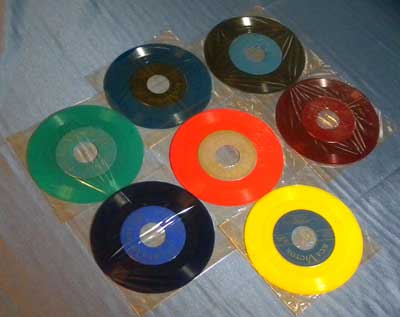
This is a photo of the seven records, still enclosed in original plastic sleaves, from a box-set album of seven 45rpm records that were included with the purchase of an RCA Victor 45rpm record player. This original box set is in the Musical Kaleidoscope archive.
RCA Victor's 1949 Preview of the World's First 45 rpm Records
This is a 45rpm record provided by RCA Victor in 1949 to demonstrate the new 45rpm records from RCA Victor. This 45rpm record contains an audio presentation of the types of music contained within the seven genres represented by colored vinyl.
The Sons of the Pioneers
"Chant of the Wanderer"
Country music was pressed on early RCA Victor 45rpm records in green vinyl. This is a 1949 release of “Chant of the Wanderer” by the Sons of the Pioneers, the group that the motion picture cowboy, Roy Rogers, had founded in 1933. This was the fourth country 45rpm record that RCA released in 1949.
"Race Records" on Orange Vinyl
“Don’t Let Nobody Turn You Around”
“Race records,” as African-American music was called at that time, was pressed on RCA Victor 45rpm records on orange vinyl. This is “Don’t Let Nobody Turn You Around” by the gospel group “Five Trumpets”. RCA Victor 45rpm labels went through phases of refinement in the printing process, and during the earlier years there was a period where the labels were nearly impossible to read.
Yellow Vinyl Children's Records
“Pee-Wee the Piccolo”
Children’s records on early RCA Victor 45rpm disks were pressed in yellow vinyl. Later yellow-vinyl records had two drawings on the label that did not appear on the very earliest 45rpm children’s releases. The earliest RCA 45s had an indented ring around the center hole while the later colored-vinyl 45s had a slope.
Dueling Speeds
Meet Mr. Optional Center
“Meet Mr. Callaghan”
Only the major labels had the production facilities and the money to produce 45rpm records. Thus, the earliest 45s were released on the Columbia, RCA Victor, Decca, Mercury, Capitol, and London labels. To accommodate record players with small spindles as well as the wide spindles needed for 45rpm records, Capitol and Columbia tried “optional centers” for a while. These could be removed by punching them out, or they could be left in the record. This idea caught on in Europe and the British Isles, but not in the US. This is a clever version of “Meet Mr. Callaghan” that makes use of a harpsichord for the melody line. It was arranged by Mitch Miller.
Bailes Brothers on a 7" LP Single
“You’ll Always be the Only One”
This country record is on Columbia a 7″ 33-1/3 LP disk. The Bailes Brothers here are singing “You’ll Always be the Only One”. From the mid-1940s through the fifties, the Bailes Brothers were one of the most popular close-harmony duet singing acts. Popular and country music issued on Columbia LPs, 45s, and 78s had a red label. Blue labels were reserved for classical records, and green labels for semi-classical.
Columbia 7" 45 Classical Records
“La plus que lente – valse”
Columbia invented the “Long Play” 33-1/3rpm record. When RCA Victor released the first 45rpm records a year later, Columbia was against adopting the 45rpm record format for singles, hoping instead that the public would purchase Columbia’s releases on 7-inch 33-1/3rpm records. They finally gave in; RCA’s 45rpm format had proved to be the winner. Not only did Columbia move to 45s for their singles, they also started selling boxed sets of 45s. As it did with its 78rpm and 33-1/3 records of the late 1940s, Columbia issued all of their classical recordings with a blue label, avoiding colored vinyl altogether. This is Debussy’s “La Plus que Lente” played by Oscar Levant.
Columbia 7" LP Classical Records
“Gayne Ballet Suite: Lullaby”
Beginning in 1948, Columbia issued “singles” on 7″ 33-1/3rpm records. Here we have Oscar Levant playing the Lullaby from Khachaturian’s Gayne Ballet Suite. After the initial competition between RCA Victor, who had invented the 45, and Columbia, who had invented the 33-1/3 LP, the outcome was that 45s became the standard to be used by both labels for “singles,” and 10″ and 12″ 33-1/3 LP records were naturally best suited for albums.
Listen to Columbia Classical Music Recordings HERE
Columbia Semi-Classical 45s
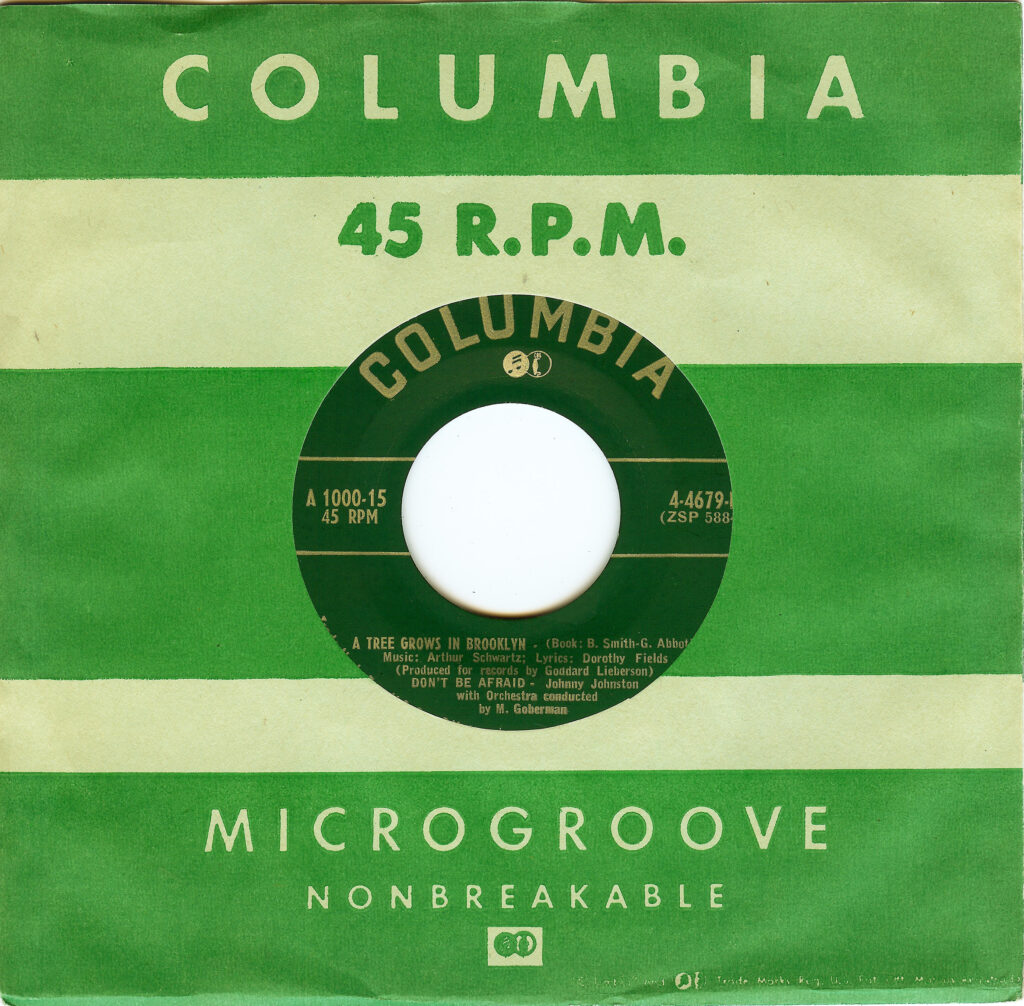
Semi-classical music was issued by Columbia with a green label. This is music from the Broadway musical A Tree Grows in Brooklyn on a 45rpm record.
Columbia on All Three Speeds
“La Mer”
A green-label 33-1/3rpm recording of French singer Charles Trenet singing “La Mer”, known in England and America as “Beyond the Sea”. Trenet wrote this very famous song.
Record Albums
A Classical 12-inch 78rpm Record Album
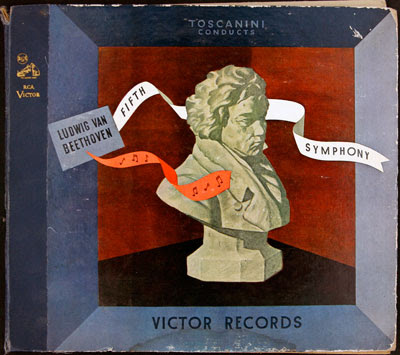
The concept of a record album emerged during the era of the 78rpm record that spanned the late 1890s to the mid-to-late 1950s. Entire symphonies and operettas, for example, could be recorded on 78rpm disks and sold as an album, similar to a photo album. The very first 78rpm record album ever issued was a recording of Tchaikovsky’s Nutcracker Suite that was released in 1909 by the German record company Odeon.
A Jazz 10-inch 33-1/3rpm LP Record Album
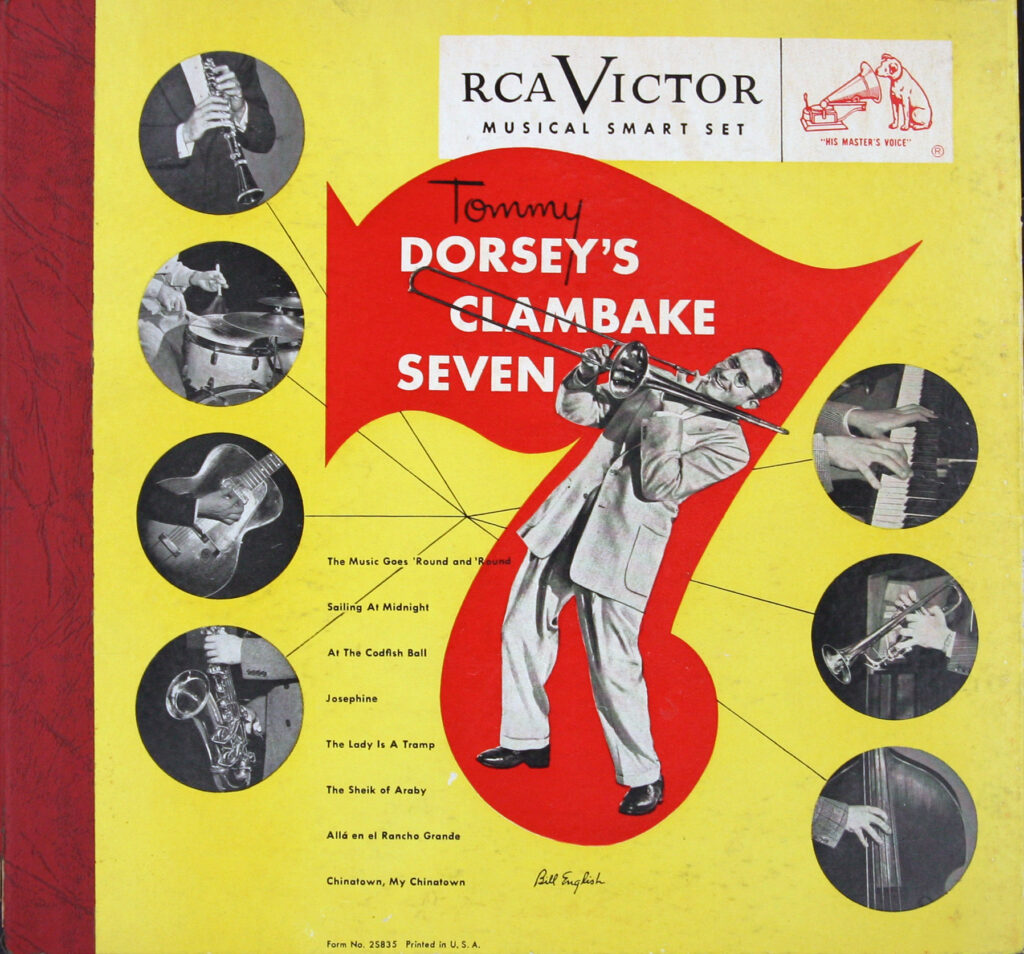
The 78rpm record albums were released in two sizes: 12-inch albums, which like 12-inch singles were mostly classical music recordings, and 10-inch albums, which like 10-inch singles, were primarily popular music recordings. The larger-sized records naturally allowed longer recordings that were required for classical music.
View Examples of 78rpm Record Albums HERE
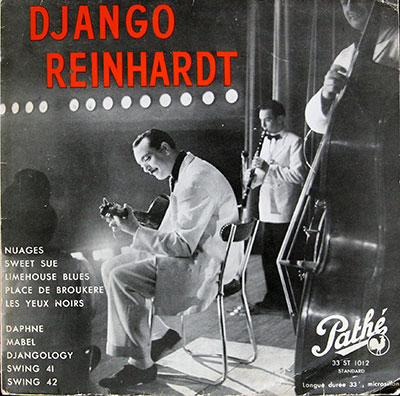
Django Reinhardt 78rpm Record Album
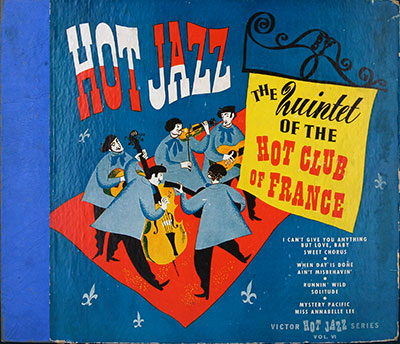
Django was the greatest jazz guitarist who ever lived. He inspired a completely new style of music called Gypsy Jazz that permeated both the worlds of jazz and blues music, as well as the music of the European gypsy communities. Passing on in 1953, he left us with a huge and important legacy of recorded music.
T-Bone Walker
T Bone Walker was one of the absolute greats of blues guitar and a major influence on B.B. King. Here we find a reissue LP from the Imperial label. T-Bone’s imperial recordings were originally all on 78rpm records that were recorded between 1950 and 1954.
Bobby 'Blue' Bland
Bobby “Blue” Bland was one of the greatest soul singers ever. This 1964 LP album with its classic cover was released on the Duke Label, originally located in Memphis, Tennesse, but relocated to Houston, Texas in 1953.
The Charlie Parker Story
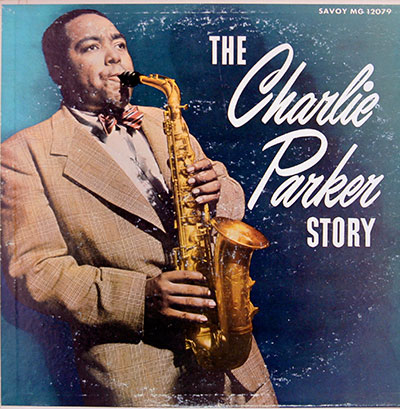
This is a very famous Long Play album recorded on the Savoy Label. Charles “Yardbird” Parker was the great exponent and innovator of jazz music whose playing, and his recordings, changed this style of American music forever.
The Savoy Record Label
The Savoy label, out of Newark, New Jersey, was not only an important jazz label, but it was also the most prolific African-American label to exist. The recordings of the 1960s are rare and provide hallmarks of African American gospel music. This 12-inch long play 33-1/3rpm record was recorded by the gospel group “The Raymond Rasberry Singers” and features one of the famous covers by “Harvey” that graced the gospel LP recordings from Savoy’s early period.
View Savoy Gospel LP Album Covers HERE
The Cleveland Colored Quintet
The Cleveland Colored Quintet, from the American city of Cleveland, Ohio, sang spiritual songs in the Southern gospel style for 27 years. This is a 12-inch long play 33-1/3rpm record on the Sacred Label.
10" LP of Indian Classical Music
This French recording features the great North Indian classical musician Ram Narayan playing the sarangi accompanied by Chatur Lal, a very gifted tabla player who died at an early age.
Red Vinyl 'Sing' Label LP Record
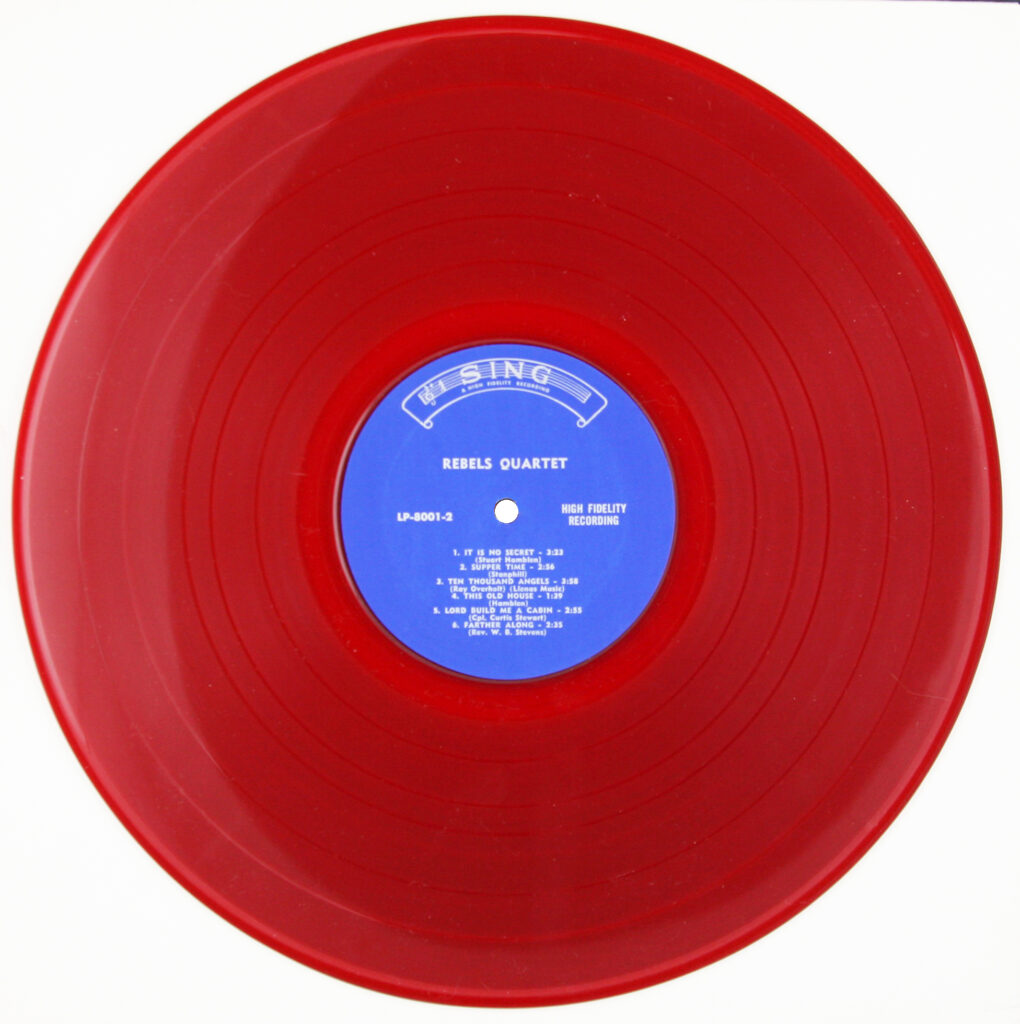
The Southern gospel group called the LeFevres owned the important Sing record label, here represented by the rare red-vinyl recording of the Rebels Quartet’s album My Greatest Moment.
Spirit of Memphis Quartet
This long-playing 33-1/3rpm recording from the Netherlands re-released early 78rpm records from the great Spirit of Memphis Quartet who were from the city of the same name.
Roberta Martin Singers
The great early Savoy 33-1/3rpm records featured covers painted by “Harvey”. The Roberta Martin Singers of Chicago are a famous gospel group.
Gregorian Chant
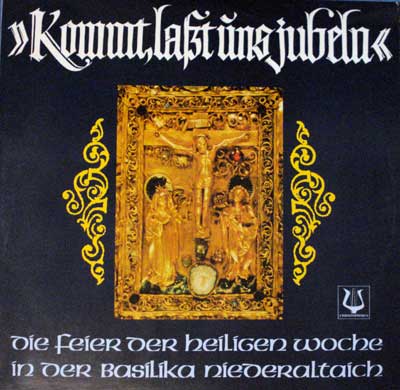
Many great LP 33-1/3rpm recordings of Gregorian chant were released in Europe, mostly on audiophile vinyl. This is a German recording of holy week music from the Basilka Niederaltaich.
Renaissance
Many beautiful LP 33-1/3rpm records were made of Renaissance sacred music. This one was recorded in Hungary and features the Girl’s Chorus of Gyōr, directed by Miklòs Szabò.
Go to the Gregorian chant section in the iUniversity HERE
View the covers of Gregorian chant on long playing records HERE