Learning from the World’s Greatest Rhythmic Traditions
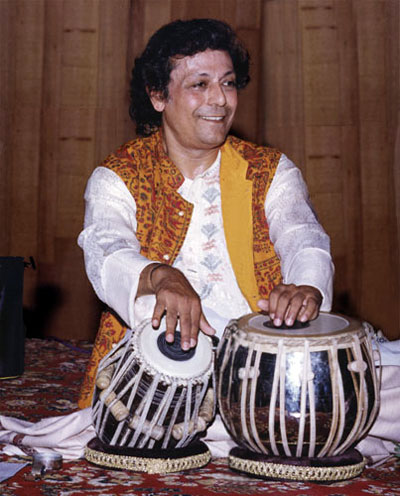
Pandit Swapan Chaudhuri Playing Tabla
The Study of Rhythm
Learning from the Masters
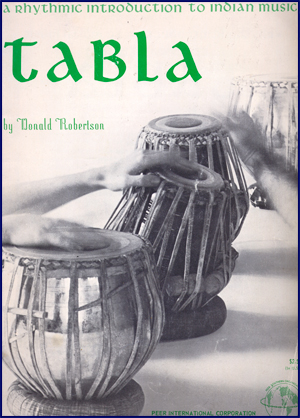
The Western world's first tabla instruction book was written by Don Robertson in 1968.
I wrote the first tabla instruction book that was published in the west in 1968 for the Peer-Southern Music Corporation in New York City. It was the companion for Harihar Rao’s sitar book. Since then, I have continued to study tabla and practice daily. My love for the composed tabla literature and for the rhythmic music produced by this drum and the musicians of genius that are a part of its legacy is boundless. It has been the ultimate teacher for me for the use of rhythm in music. My wish for the iUniversity is not to help players learn to play the instrument, as there are many teachers for that, but to pass on to the young composers of the 21st century – uninterested in the complications and confusion inherited from 20th century classical music – this great rhythmic classical music tradition. The language of the tabla and pakhawaj is all that one needs to learn in order to recite the compositions of genius that I have collected over the past 45 years.
The Two Drums
There are two primary drumming traditions in North Indian classical music. One, the oldest, is associated with the Dhrupad and Dhamar styles of singing. In these styles, the pakhawaj drum is employed. The tabla is prevalent across the Indian subcontinent and serves as the principal percussion instrument for North Indian classical music. It is heavily utilized in India, Pakistan, Bangladesh, Nepal, and Sri Lanka. Globally, the tabla’s reputation for complex rhythms and versatility has led to its integration into fusion, jazz, and world music.
The Language
Both pakhawaj and tabla drumming traditions use a vocal language to describe patterns and compositions performed on the drums. Syllables such as “Ga”, “Dha”, “Na”, “Te”, and “Ta” represent specific sounds that made on the drum. The same language is employed in both the pakhawaj and tabla traditions. Therefore, older compositions for the pakhawaj may be played on the tabla. The sounds of this language are called boles.