The iUniversity
Section Ten
French Classical Music of the Romantic Era
César Franck’s beautiful, magical music inspired the young composers of Paris, and Franck’s works of the time used harmonies that opened the door to musical impressionism. Franck’s “Psyché: symphonic poem for orchestra and chorus” was composed during 1886-87 and was performed on March 10, 1888 in Paris was completely new music of a different kind. The entire work, consisting of romantic, passionate harmonies composed for orchestra and female chorus.
Franck, who like Bach before him, was considered by the academics to be only a simple ‘church organist.’ He was completely misunderstood by the musical establishment of Paris, but he had attracted all of the talent to his organ class at the conservatoire where, banned from teaching composition, he taught his students improvisation, which is basically the same thing. Students flocked to these organ classes, many not even being enrolled. Debussy audited Franck’s classes and held the master in great esteem thoughout his lifetime. It was Franck’s passionate string quartet of the same period that set a new tone for string quartet writing and it was the inspirations for Debussy’s own quartet.
Franck’s Psyché had a great influence on the music of contemporary France. Gabriel Fauré composed his Requiem in D minor, Op. 48, between 1887 and 1890.
The new harmony developed called impressionsm developed in france during the period 1886-1888. Started with Wagner who used the colourful chords of French Romantism for the first time: unresolved minor and major 7th and 9th chord, 13th “Rheingold” chords from Götterdämmerung and the famous “Tristan” half-diminished chord that is always acknowledged in all harmony text books. These are the harmonies that will be adopted by the jazz musicians of the 1950s attentively listening to Debussy recordings.
The new harmony developed called impressionsm developed in france during the period 1886-1888. I have not been able to dertermine exactly where it all started. Debussy, Fanelli, Satie, Chabrier are the players, and they all were in Paris and all under the influence of Wager’s amazing harmonic language of the Ring and Tristan und Isolde.
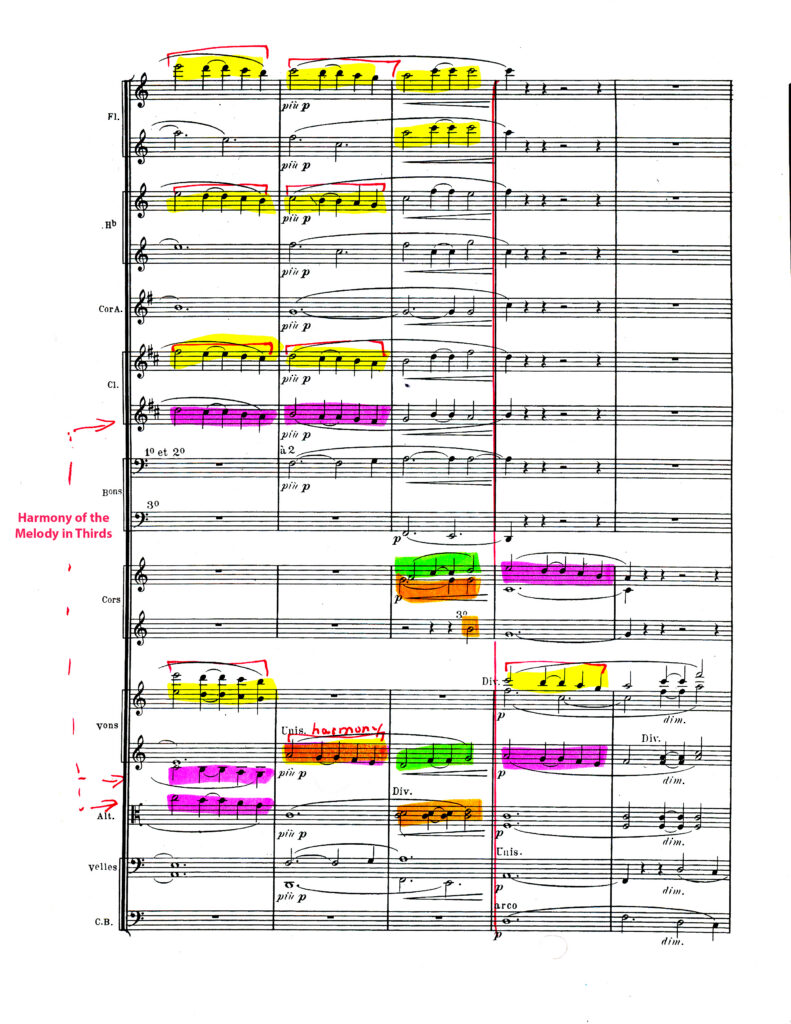
Impressionist harmonic language is built by “stacking thirds”
Harmony had expanded upward through the upper partials over a timeline in Western classical music. Harmony during the 16th century was basically root-position major and minor chords with suspensions and diminished triad in places, especially cadences. During the following century, dominant sevenths, with resolutions were introduced. The 18th century saw the inclusion of diminished 7ths. Major and minor 7ths (and some 9ths) were used in the works of the 19th century really only as passing chords. The sound of the major and minor 7ths and 9ths used as concords that were introduced in France during the 1880s were a revelation to music, and thus harmony later called impressionist harmony was born. The timeline is the unveiling of upper partial harmony over ages.
The Mysterious Ernest Fanelli
The person who first discovered upper-partial impressionist harmony was a Frenchman named Ernest Fanelli (1860-1917). He is basically an unknown composer today, but I discovered him over 40 years ago through my research. He wrote music that stacked chords up to the 13th and beyond as early as 1886, before any other known composer. There is not a lot of published information about Fanelli, but Debussy did know him. It is claimed that during the 1890s, Debussy was so sensitive to the claims that Fanelli was the source of Debussy’s musical style that he tried to avoid being seen listening to Fanelli’s work. It is also said that the poet Ezra Pound recalled an episode where he was sitting in a restaurant listening to Fanelli play a composition on the piano when Debussy walked in. As soon as Debussy saw Fanelli, he turned and walked out.
The composer George Antheil, in his book “Bad Boy of Music” states that Erik Satie, Ravel and Debussy had all visited Fanelli’s home and studied his unpublished scores before writing their own works. Antheil writes about how he had discovered the Fanelli compositions himself. Constantine von Sternberg had told him of Fanelli’s amazing harmonic innovations, and he visited Fanelli’s widow. She allowed Antheil to look through her husband’s scores. Antheil wrote,
I soon discovered that Constantine von Sternberg had been right, at least in one regard: the works of Fanelli were pure “Afternoon of a Faun” or “Daphnis and Chloe”, at least in technique, and they predated the Debussy-Ravel-Satie works by many years. But, as I also soon discovered, they were not as talented as the works of the two slightly younger men, although they had had the advantage of being “firsts” … Debussy was the genius who had distilled Fanelli into immortality!
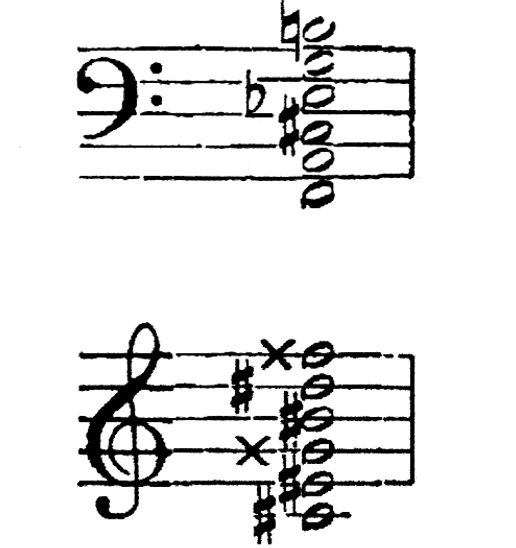
The first part of Fanelli’s Tableaux symphoniques was composed in 1883. There are some very original harmonies in this work. For example, one place where a succession of diminished 5ths and minor 7ths, proceeding by similar motion are imitated by the 7th in two upper parts. These create a string of major thirds derived from the whole tone scale.
Let us look at this example from part two of the same work, composed in 1886. This if from “Tableaux symphoniques” by Ernest Fanelli. Second Part,
Now here are examples of the kinds of chords in Fanelli’s Le Cauchemar of 1888:
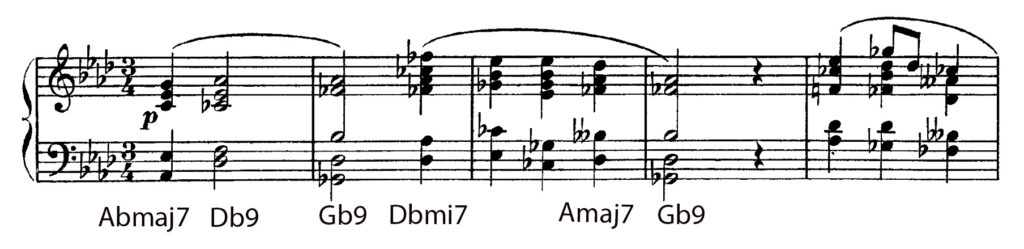
The composer who was to fully create impressionist harmony was Éric Satie (1866 –1925). He lived in Paris and most certainly knew Fanelli. Satie’s Sarabandes of 1887 show us for the first time, the full impressionist harmonies of major and minor 7ths and 9th chords. The sparsity of this work and the two Gymnopédie of 1887 was clearly inspired by the opening chords of Chabrier’s opera Le roi malgré lui.
Composed in 1886 and premiered on May 18, 1887, Chabrier’s music was ardently admired by musicians, especially Maurice Ravel, who claimed he could play the whole piece from memory. He claimed that “the premiere of Le roi malgré lui changed the course of French harmony”. Harmonic progressions that were new in French music at the time were employed – most notably the use of unprepared and unresolved chords of the seventh and ninth, such as the very first chords of the Prelude to the opera.
The First Five Measures of Eric Satie’s Sarabande No. 1
César Franck’s Psyché
It was the music of César Franck that inspired the young composers of Paris. Franck’s works of the time used harmonies that opened the door to musical impressionism. Franck’s “Psyché: symphonic poem for orchestra and chorus” was composed during 1886-87 and was performed on March 10, 1888 in Paris was completely new music of a different kind. The entire work, consisting of romantic, passionate harmonies composed for orchestra and (FEMALE?) chorus. Franck, who like Bach before him, was considered by the academics to be only a simple ‘church organist.’ He was completely misunderstood by the musical establishment of Paris, but he had attracted all of the talent to his organ class at the conservatoire where, banned from teaching composition, he taught his students improvisation, which is basically the same thing. Students flocked to these organ classes, many not even being enrolled. Debussy audited Franck’s classes and held the master in great esteem thoughout his lifetime. It was Franck’s passionate string quartet of the same period that set a new tone for string quartet writing and it was the inspirations for Debussy’s own quartet.
I believe Franck’s Psyché had a great influence on the music of contemporary France. Gabriel Fauré composed his Requiem in D minor, Op. 48, between 1887 and 1890. Chabrier. Etc.
Fanelli and Satie were experiementers, amateures really. Fanelli’s music, and only one work has so far been recorded (xxxx) is not monumental, and yes, Satie’s is. (Debussy orchestrated two of Satie’s Gymnopiedies for piano in 18xx). But it was Psyche that was the work of pure angelic, romantic genius.
The work opens with quiet strings and a solo clairnet played on the off-beats and rests briefly in measure five on an x minor seventh chord. This sets the tone for the entire work.
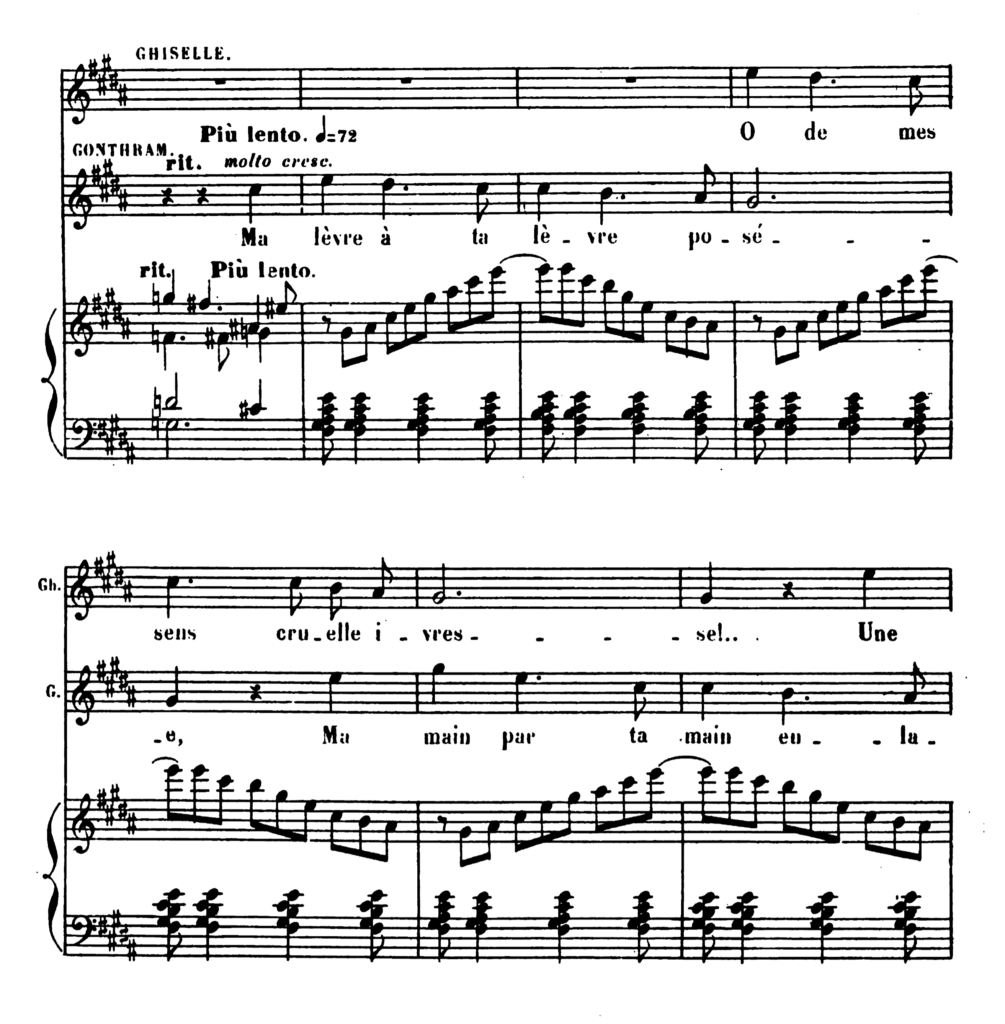
The master’s last work, his opera Ghiselle, completed before he died, but before he could finish (???) orchestrate it (his student’s did this) boldly contain the following beautiful music. This:
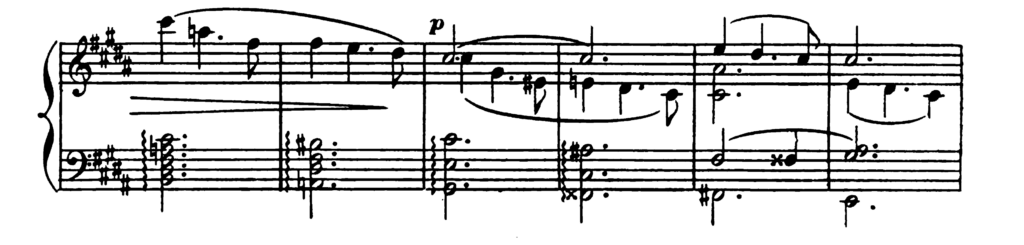
And this:
César Franck, remains misunderstood today, many of his greatest works unperformed and unpublished, even though he was France’s greatest composer in my opinion, created a masterpiece in this, his last great work, his opera Ghiselle, and staill at the time of this writing, it has never been recorded, and is never performed. (Footnote – I wrote to x author of the great 1999 biography of Franck a while back and I believe that he mentioned that there had been once performance since the single performance that took place after Franck’s death.
French Composers with Recommendations
Ernest Chausson (1855-1899)
Poème for violin and orchestra
Poème de l’amour et de la mer
Claude Debussy (1862-1918)
La Mer, La Damoiselle élue
Noctures, Printemps
Prélude à l’après-midi d’un faune
Vincent d’Indy (1851-1931)
Symphonie sur un chant montagnard français
Symphony No. 2
Joseph Guy Ropartz (1864-1955)
Symphonies 1-5, Requiem
La cloche des morts
Psaume CXXXVI (Psalm 136)
Le miracle de Saint Nicolas
Erik Satie (1866-1925)
Gymnopédies 1 & 3 (orch. Debussy)
Cèsar Franck (1822-1890)
Symphony, Psyche, Hulda
Ghiselle, Les Béatitudes
Variations symphonic
Ruth, Redemption, Rebecca
Albéric Magnard (1865-1914)
Symphonies 1-4
Chant funebre
Hymn a la justice
Cuercoeur
Charles Tournemire (1870-1939)
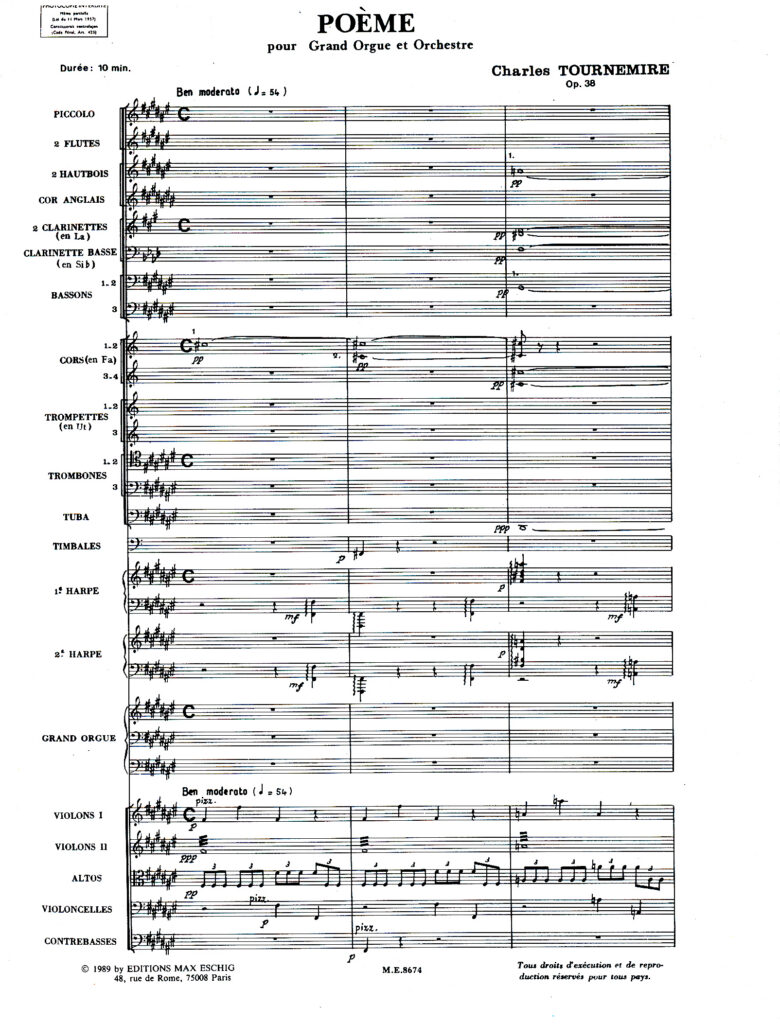
Poem for Organ and Orchestra Opus 38
Charles-Marie Widor (1845-1937)
Symphonies 1,2, & 3
Symphony antique, Symphony sacre
Organ Symphony 5
Organ symphonies “Gothique” & “Romane”
Maurice Durufle (1902-1986)
Requiem, Messe cum jublio
Trois danses
Henri Duparc (1848-1933)
Aux étoiles, Lénore
Camille Saint-Saëns (1835-1921)
Symphony No. 3
Violin Concerto No. 3
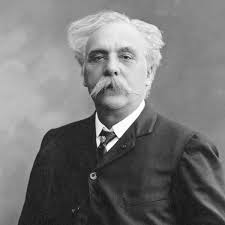
Gabriel Fauré (1845-1924)
Requiem
Guillaume Lekeu (1870-1894)
Adagio
Emmanuel Chabrier (1841-1894)
España
A Taste of Romantic Era Musical Paris
Photos by Don Robertson (2009)
Scenes from the Paris Musical Goldmine
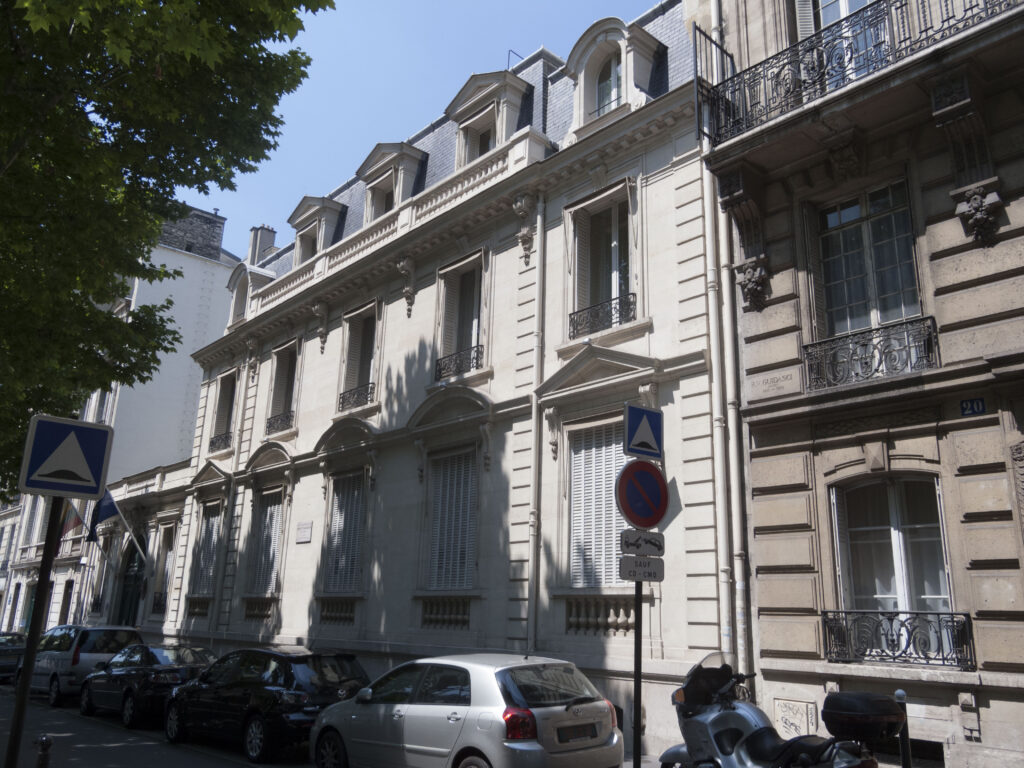
Chausson occupied a large home at 22 Boulevard de Courcelles in Paris. It was furnished luxuriously, filled with art by the impressionist painters: Manet, Corot, Renoir and Degas and the like. His soirées were attended by the great poets, artists, composers, and musicians of the time, such as Bouchor, Gide, Mallarmé, Rodin, Debussy, d’Indy, Magnard. Besnard, CarriEre, Manet, Redon, Degas, Renoir, Denis, Vuillard, Ysaye, and Rodin.
About malarmes swareez
Lorem ipsum dolor sit amet, consectetur adipiscing elit. Ut elit tellus, luctus nec ullamcorper mattis, pulvinar dapibus leo.
Videos
My Organ video
My composer home and rue de rome video
Featured Composers
César Franck
by Don Robertson
In 1971, I began a renewed study of the great works of the European harmonic music tradition because I wanted to discover the music from the centuries preceding the 20th that I considered important emotionally and spiritually, and it was within the next few years that I first discovered the great French composer César Franck, whom the music professors and writers in the academic world had left behind. I have continued to study Franck’s music and that of his students for over 40 years. Because information about Franck and his circle of composers was very difficult to find, and recordings were unavailable, it took me a long time to come to the understanding that César Franck was a completely misunderstood composer. This misunderstanding began during Franck’s lifetime, when his enlightened music was beyond the comprehension of most of his contemporaries, even within his own family, and the misunderstanding was then perpetuated by misinformed opinions published in biographies and articles both during Franck’s lifetime and after. I finally realized that César Franck was France’s greatest composer!
Franck created the oeuvre that he left behind from a higher level of inspiration than the 20th century was ready for, and thus it was very much disregarded by the composers and educators of that era. When 20th-century composer and educator Olivier Messiaen was asked about Franck, he simply replied “He is dead.” Organists knew that Franck had created some of the greatest organ works in the repertoire, choirs treasured his single famous choral composition, Panis Angelicus, violinists knew that Franck’s beautiful Violin Sonata was a masterpiece, and Franck’s symphony had found favor for a while with audiences during the last century, but some of Franck’s greatest masterpieces, such as his great last two operas, and his great choral works and symphonic poems are simply never performed, especially in America, nor are they available on commercial recordings. However, I am here to say that it is César Franck – and his students – who will provide the musical bridge for the European harmonic tradition to span over the destructive energy of 20th-century classical music. It will be through the discovery of this great French romantic tradition that concert halls will again resound with joyous harmonic song, helping to dispel the discords redolent of the 20th century.
César Franck in Paris
Photos by Don Robertson (2009)
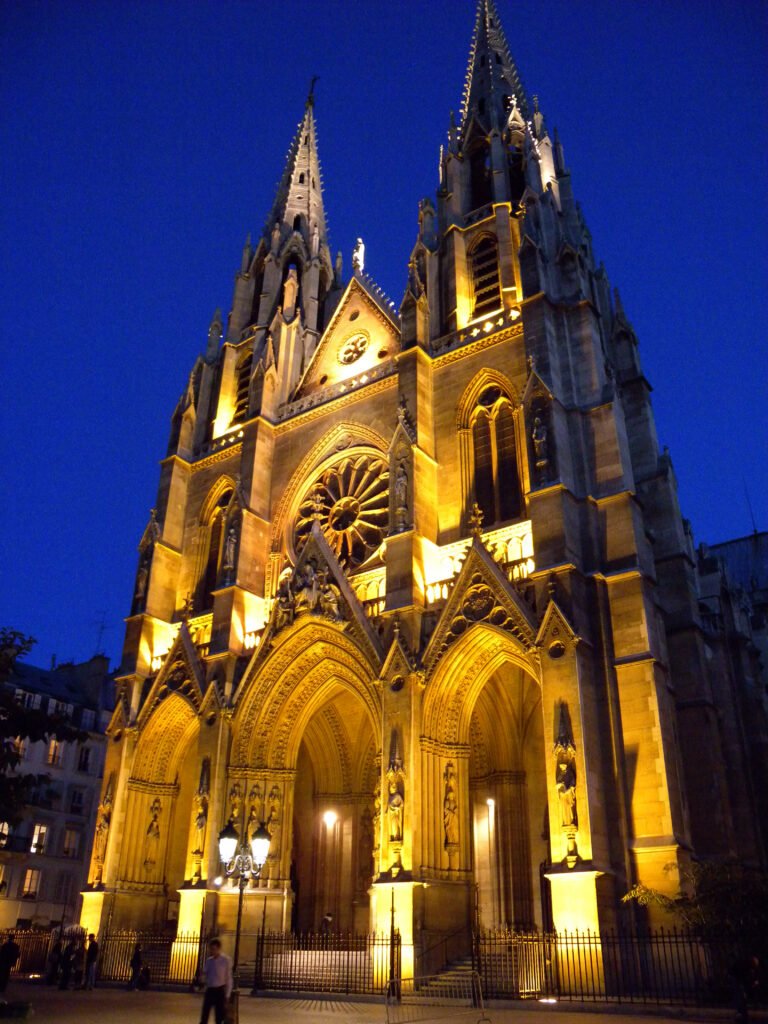
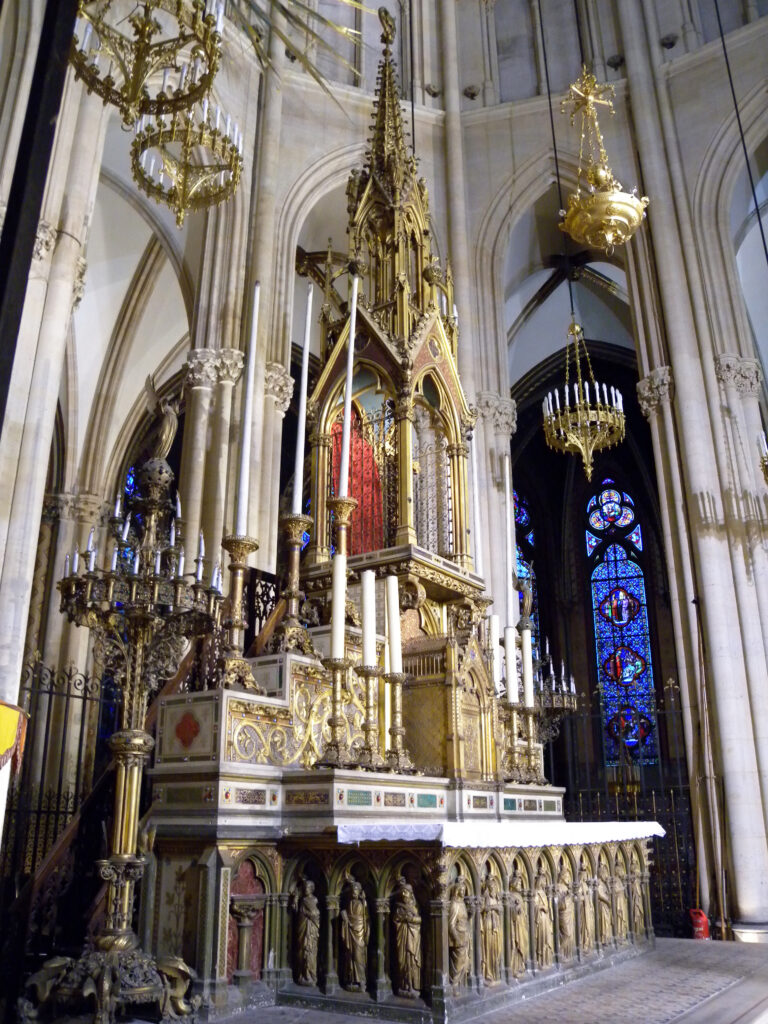
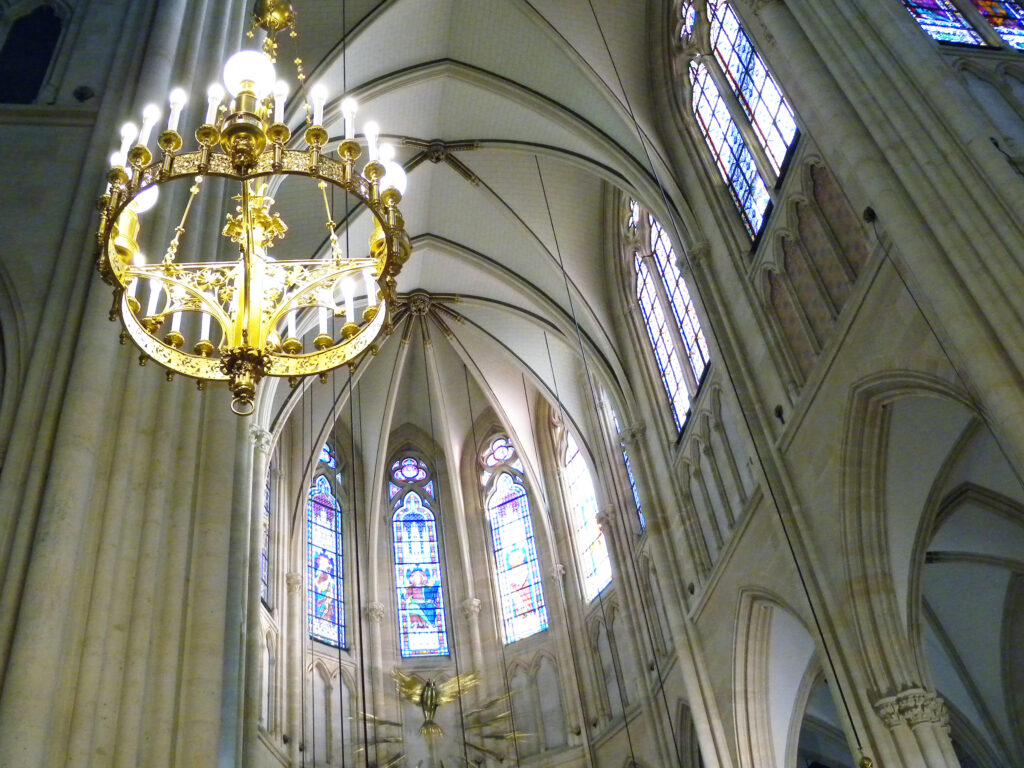
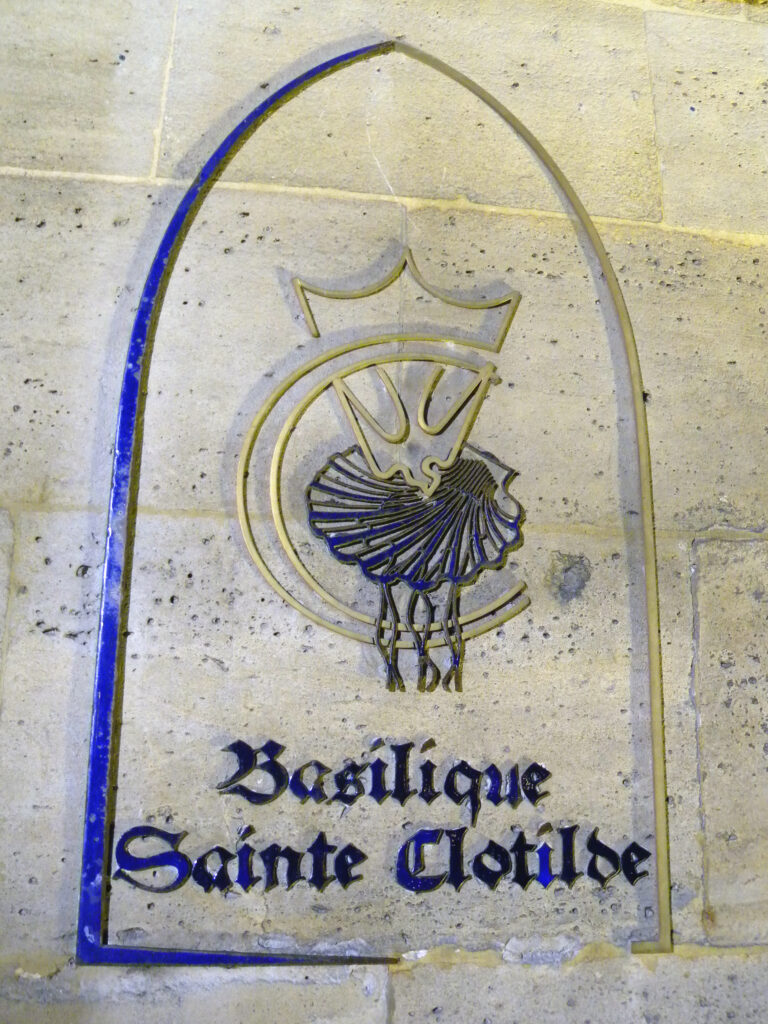
César Franck – x years organist at the beautiful Basilique Sainte Clotilde in Paris
Lorem ipsum dolor sit amet, consectetur adipiscing elit. Ut elit tellus, luctus nec ullamcorper mattis, pulvinar dapibus leo.
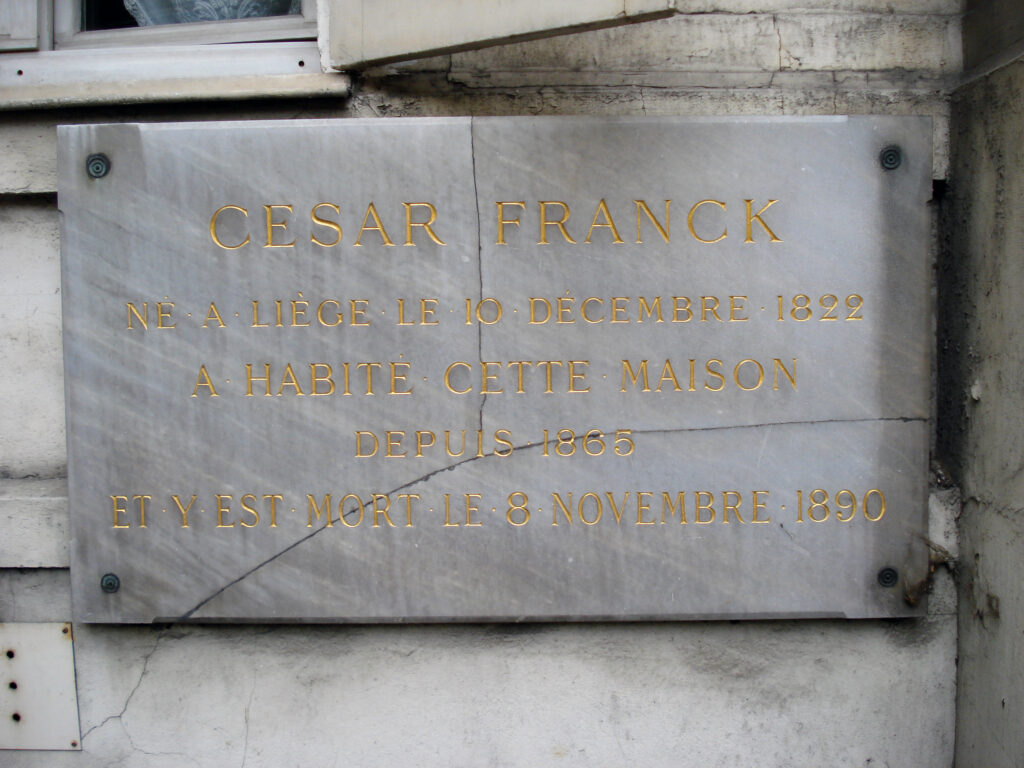
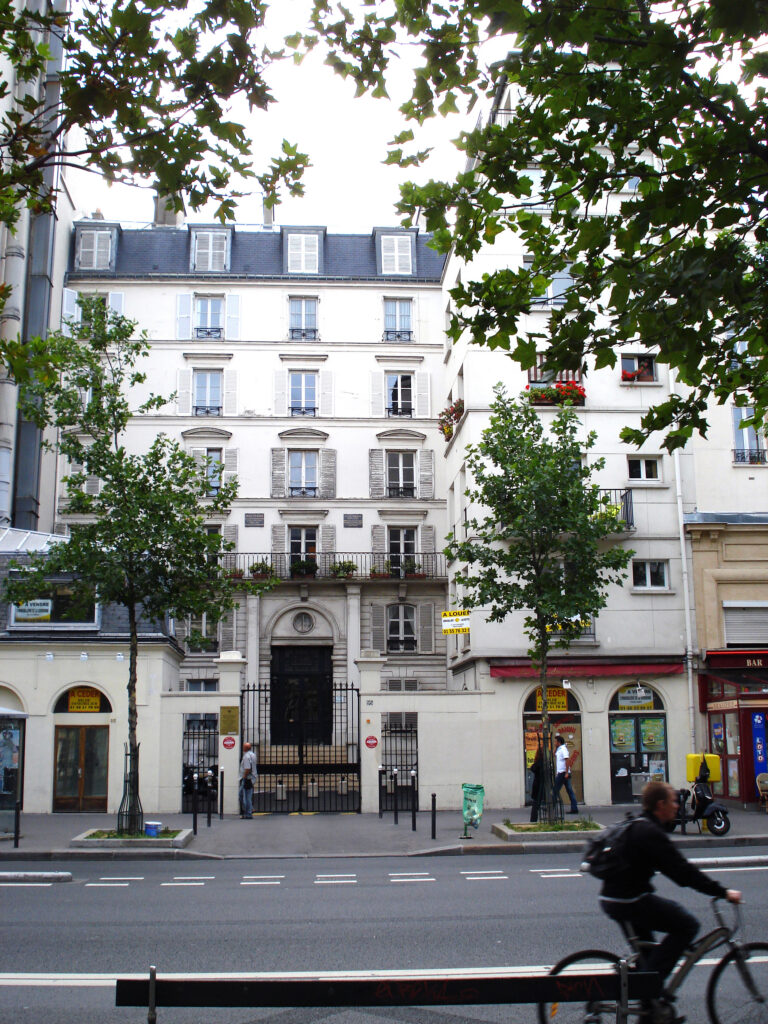
Cesar Franck’s Home on Rue St. Michael
Lorem ipsum dolor sit amet, consectetur adipiscing elit. Ut elit tellus, luctus nec ullamcorper mattis, pulvinar dapibus leo.
Videos
Ernest Chausson (1855-1899)
Ernest Chausson (1855-1899) died in a bicycle accident at an early age. His music is wonderful… filled with parfum français. Among his great works is the Poème de l’amour et de la mer, Opus 19 (Songs of Love and the Sea – I heard it performed in the Concertgebouw in Amsterdam – what a joy!), his opera, Le roi Arthus, the Poème pour violin et orchestre, his chamber works and his songs. He was in love with Wagner’s music.
Éric Satie (1866 –1925)
ddd
Claude Debussy (1862-1918),
), the famous composer of La Mer and Après midi d’un faune, audited Franck’s classes. Debussy and Chausson had met at the Paris Conservatoire and the two had formed a deep relastionship that ended in a rupture several years before Chausson’s unfortunate early death. Debussy’s famous string quartet was inspired by the revolutionary quartet of César Franck, to whom the quartet was originally dedicated. Debussy referred to it as “your quartet” in correspondence. Franck’s student Henri Büsser left his imprint on today’s concert halls with his bearutiful orchestration of Debussy’s Petite suite.
Duparc
adfs
Videos
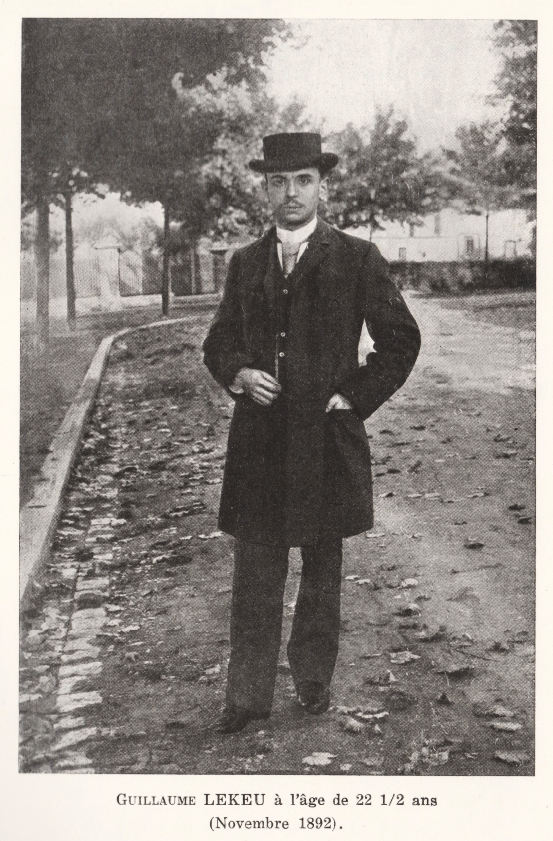
Guillaume Lekeu (1870-1894)
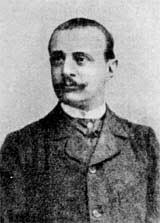
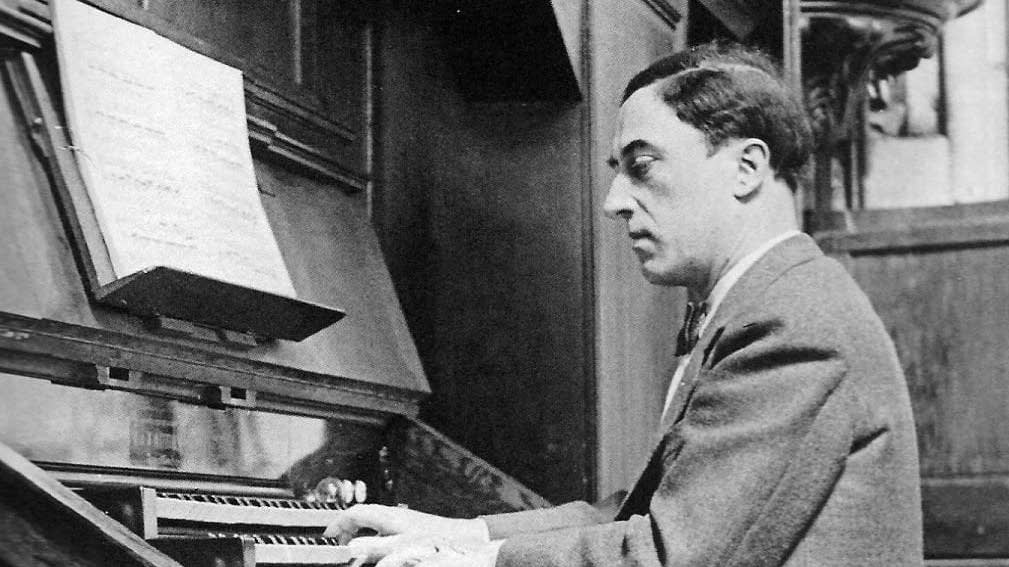
Guillaume Lekeu’s (1870-1894) lush aural canvases stopped flowing from his pen in 1894 when he died at age 24. Charles Tournemire (1870-1939) composed eight symphonies, four operas, twelve works of chamber music, eighteen piano works and numerous works for organ. He was born in Bordeaux, moved to Paris when he was a child and, along with Henri Busser and Guillaume Lekeu became one of Franck’s youngest students. His early works were greatly influenced by César Franck and very difficult to find (I heard the composer’s Poeme for orchestra in the Concertgebouw just one time. I was very fortunate to hear his Poem for Organ and Orchestra, Opus 38 performed in Amsterdam’s great Concertgebouw, but have never found a recording of the piece). Tournemire, like Franck student Louis Vierne (1870-1937), lasted into the 20th century, unfortunately becoming influenced by the 20th century’s dark, discordant styles.
Videos
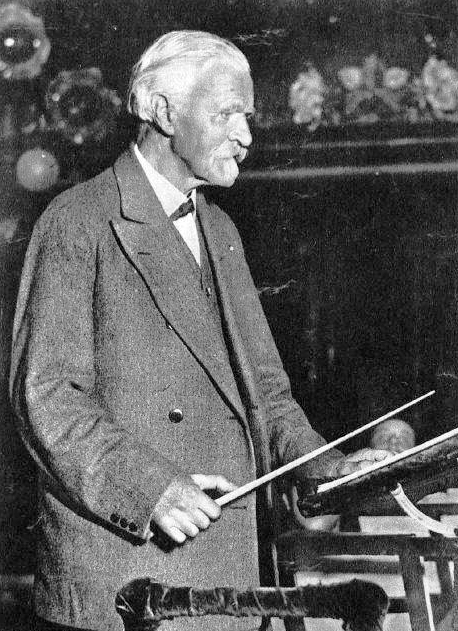
Vincent d’Indy (1851-1931)
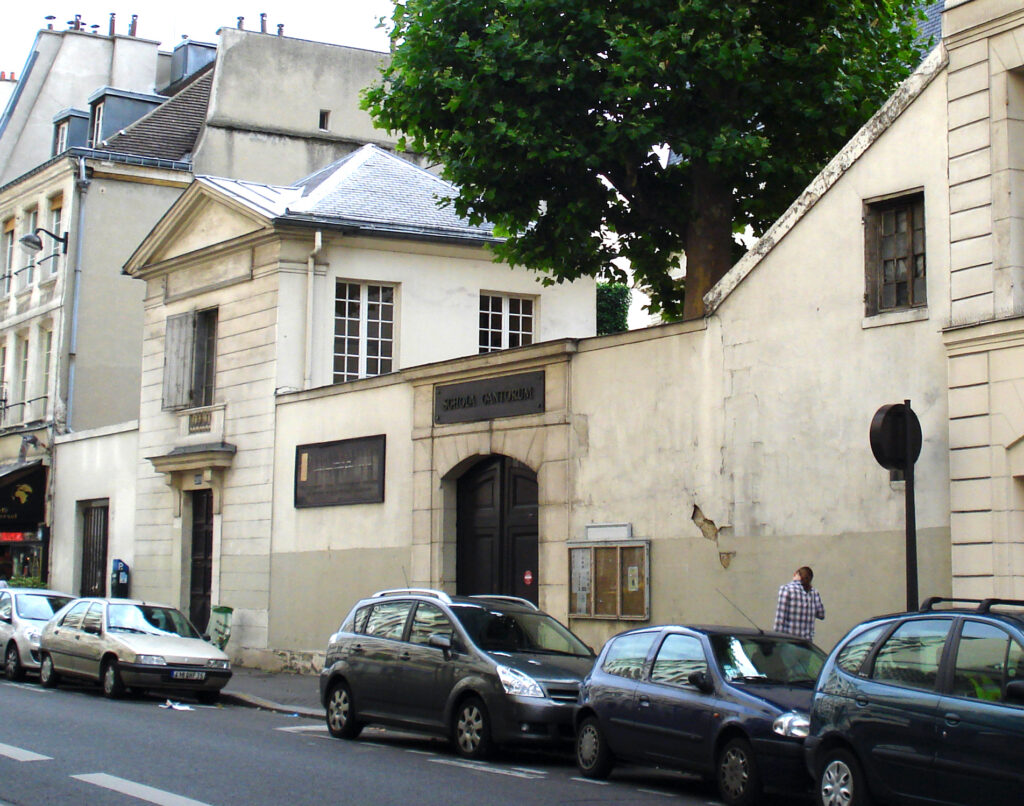
Vincent d’Indy (1851-1931) was an aristocrat and a devoted student of Franck. He wrote a large number of works that deserve to re-enter our concert halls and be heard again. His most important function, however, was as a great educator and reformer. Along with Charles Bordes and Alexandre Guilmant, he founded the Scola Cantorum music school in Paris in 1894. It’s alumni include many of France’s 20th century composers. D’Indy brought to his students the music of Franck for serious study, as well as that of the almost completely forgotten great composers of the Renaissance, and the German tradition of Bach, Beethoven and Wagner that had fallen out of favor among many French composers. D’Indy was also responsible for the awakening of interest in Gregorian chant, and personally introduced the great 17th Century composer Claudio Monteverdi to the modern world, with d’Indy’s own transcriptions and prodctions.
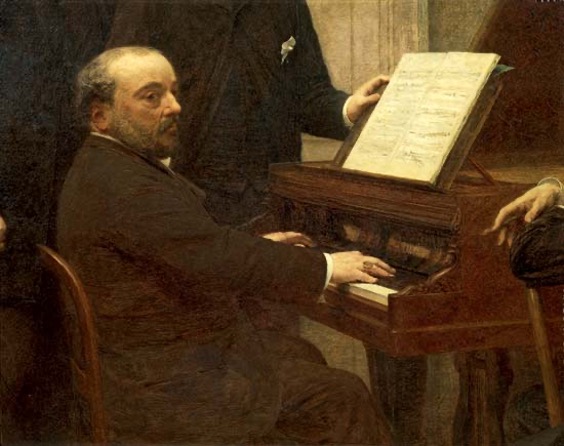
Emmanuel Chabrier (1841–1894)
Emmanuel Chabrier (1841–1894) was a French Romantic composer and pianist. Although known primarily for two of his orchestral works, España and Joyeuse marche, he left an important corpus of operas (including L’étoile), songs, and piano music. He was admired by composers as diverse as Debussy, Ravel, Richard Strauss, Satie, Schmitt, Stravinsky, and the group of composers known as Les six. Chabrier’s friends in Paris included Gabriel Fauré, Ernest Chausson, and Vincent d’Indy, as well as the painters Henri Fantin-Latour, Edgar Degas and Édouard Manet, whose Thursday soirées Chabrier attended and writers such as Émile Zola, Alphonse Daudet, Jean Moréas, Jean Richepin, Auguste Villiers de l’Isle-Adam and Stéphane Mallarmé.
On a trip to Munich with Henri Duparc in 1879, he discovered Wagner’s opera Tristan und Isolde. This event led him to realize his true passion for composition, and he resigned from the Ministry of the Interior in 1880. That year he composed his piano cycle Pièces pittoresques, of which the Idylle greatly influenced Francis Poulenc.
Chabrier plunged himself into the scores of Wagner, and became an assistant to Charles Lamoureux in preparing concert performances of the German composer’s works in Paris. He travelled to London (1882) and Brussels (1883) to hear Wagner’s Ring cycle. However, the strength of Chabrier’s musical personality and his essential Frenchness of temperament and sensibility made it impossible for him to do more than experiment with Wagner’s more superficial technical procedures, without getting involved in the aesthetic and philosophical theories.
In 1882 Chabrier visited Spain, which resulted in his most famous work, España (1883), a mixture of popular airs he had heard and his own imagination. In the view of his friend Duparc, this composition for orchestra demonstrated an individual style that seemed to come from nowhere; other contemporary musicians were more condescending. (Wikipedia)
Charles Bordes (1863 – 1909)
Charles Bordes (1863 – 1909) became maître de chapelle at the église Saint-Gervais in Paris in 1890, and there he created the Saint-Gervais singers choir. In 1892 he organized the Saint-Gervais holy weeks where the mass was accompanied by French and Italian sacred choral music from the Renaissance. This composition student of César Franck effectively brought out of almost complete obscurity one of the greatest bodies of music ever created: the sacred music of the Renaissance and the great composers of that time: Josquin, Palestrina, Victoria, Gallus and Lassus. The Saint-Gervais concerts had a very important effect on the very alive artistic community in Paris at that time, most notably Claude Debussy. It was Bordes work that lead to St. Pius X’s Motu Proprio Tra le sollecitudini of 1903 to restore Gregorian chant in the liturgy. Classical and Baroque compositions had long been favoured over Gregorian chant.
Joseph-Guy Ropartz
REDOThe Franck tradition was passed onto his students, one of whom was the French composer Joseph-Guy Ropartz, who died in 1955. His name is almost completely unknown in classical music circles and his music unplayed. During my forty years of study of the works of Franck and his students, Ropartz’ music was so elusive that one was unable to discover it at all for many years. It was not until scores appeared on the internet for the first time in around 2006 (on imslp.org), that I began to realize that I had discovered a great composer, one of the greatest composers of the 20th century! On my trips to France during 2007 and 2009, I found newly released compact disc recordings of Ropartz’ music, and all of this opened the door for me. In January, 2010, I wrote an article about Guy Ropartz’s 3rd Symphony.
Videos
3 – Albéric Magnard
Lorem ipsum dolor sit amet, consectetur adipiscing elit. Ut elit tellus, luctus nec ullamcorper mattis, pulvinar dapibus leo.
Videos
4 – Maurice Duruflé
The Franck tradition was passed onto his students, and the greatest of these was the French composer Joseph-Guy Ropartz, who died in 1955. His name is almost completely unknown in classical music circles and his music unplayed. During my forty years of study of the works of Franck and his students, Ropartz’ music was so elusive that I was unable to discover it at all for many years. It was not until scores appeared on the internet for the first time in around 2006 (on imslp.org), that I began to realize that I had discovered a great composer, one of the greatest composers of the 20th century! On my trips to France during 2007 and 2009, I found newly released compact disc recordings of Ropartz’ music, and all of this opened the door for me. In January, 2010, I wrote an article about Guy Ropartz’s 3rd Symphony.
Lorem ipsum dolor sit amet, consectetur adipiscing elit. Ut elit tellus, luctus nec ullamcorper mattis, pulvinar dapibus leo.
Videos
The French Romantic Pipe Organ
Lorem ipsum dolor sit amet, consectetur adipiscing elit. Ut elit tellus, luctus nec ullamcorper mattis, pulvinar dapibus leo.
Videos
Scores
Orchestral Works
MO-020 – Banquet francais Volume 1 (358 pages)
Tournemire, Duparc, Debussy, Chabrier,
Lekeu
MO-021 – César Franck – Les Sept Paroles du Christ sur la Croix and Ballet Algorique (230 pages)
MO-022 – César Franck – Ruth (Églogue Biblique) (211 Pages)
MO-023 – César Franck – Symphony and Excerpts from Psyche (206 pages)
MO-024 – César Franck – Rédemption (260 pages)
MO-025 – César Franck – Les Beatitudes (300 pages)
MO-026 – César Franck – Tone Poems (310 pages)
MO-027 – French Romantic Era Organ Music (186 pages)
Franck, Widor
MO-028 – Ernest Chauson – Symphony and Poëme de l”Amour et de la Mer (222 pages)
MO-029 – Ernest Chausson’s Opera Le Roi Arthus Act 1 (177 pages)
MO-030 – Ernest Chausson’s Opera Le Roi Arthus Act 2 (225 pages)
MO-031 – Ernest Chausson’s Opera Le Roi Arthus Act 3 (212 pages)
MO-032 – Gabriel Fauré – Requiem and Pelléas et Mélisande (184 pages)
MO-033 – Camille Saint Saens Symphony No. 3 and Violin Concerto No. 3 (310 pages)
MO-034 – Charles-Marie Widor – Symphonies Volume 1 (276 pages)
MO-035 – Charles-Marie Widor – Symphonies Volume 2 (346 pages)
MO-036 – Joseph Guy Ropartz – Symphonies No. 1 and 2 (300 Pages)
MO-037 – Joseph Guy Ropartz – Symphonies No. 4 and 5 (268 Pages)
MO-038 – Joseph Guy Ropartz – Symphony No. 3 and Three Tone Poems (265 pages)
MO-039 – Albéric Magnard – Symphony No. 1 (206 pages)
MO-040 – Albéric Magnard – Symphony No. 2 and Chant funebre (215 pages)
MO-041 – Albéric Magnard – Symphony No. 3 and Hymn a la justice (230 pages)
MO-042 – Albéric Magnard – Symphony No. 4 (207 pages)
MO-103 – The Orchestral World of Claude Debussy Volume 1 (190 pages)
MO-104 – The Orchestral World of Claude Debussy Volume 2 (180 pages)
MO-105 – The Orchestral World of Claude Debussy Volume 3 (150 pages)
MO-106 – Claude Debussy – Pelléas et Mélisande (410 pages)
MO-107 – Vincent d’Indy – Two Symphonies (300 pages)
Sacred Music for Voice or choir
MS-001 – An Album of French Choral Music (278 pages)
Franck, Ropartz
Songs
MS-002 – An Album of Fifty French Songs (250 pages)
Franck, d’Indy, Duparc, Faure, Lekeu,
Chausson, Debussy, Ropartz
Chamber Music
MT-005- César Franck – Chamber Music (312 pages)
MT-006 – French Romantic Era Chamber Music (230 pages)

Chausson, Fauré
Vocal Scores
MV-001 – César Franck – Hulda Vocal Score (335 pages)
MV-002 – César Franck – Ghiselle Vocal Score (306 pages)
MV-003 – César Franck – Ruth Vocal Score ( pages)
MV-004 – César Franck – Les Sept Paroles du Christ sur la Croix Vocal Score (64 pages)
MV-005 – César Franck – Redemption Vocal Score (135 pages)
MV-006 – César Franck – Rebecca Vocal Score (77 Pages)
MV-007 – César Franck – Les Beatitudes Vocal Score (316 pages)
MV-008 – César Franck – Psyche Vocal Score (103 pages)
MV-009 – Ernest Chausson – La Légende de Sainte Cécile Vocal Score (73 pages)
MV-010 – Ernest Chausson – Le Roi Arthus Vocal Score (351 pages)
MV-011 – Joseph Guy Ropartz – Le Pays Vocal Score (144 pages)
MV-012 – Albéric Magnard – Cuercoeur Vocal Score (246 pages)
MV-013 – Joseph Guy Ropartz – Psaume CXXXVI (Psalm 136) (38 pages)
MV-014 – Guillaume Lekeu – Andromède (66 pages)
Study Scores
MF-001 – César Franck Symphony Study (160 pages)
MF-002 – César Franck Psyche Study
MF-003 – Claude Debussy Study
La Damoiselle Elue Study (75 Pages)
Printemps Study (50 Pages)
Nocturnes Study (114 Pages)
MF-004 – Ravel and Ropartz Study (235 pages)
Joseph-Guy Ropartz 3rd Symphony Study (128 Pages)
Maurice Ravel Tombeau de Couperin Study (106 Pages)
MF-005 – Ropartz 2nd Symphony (157 pages)
Book Reprints (en français)
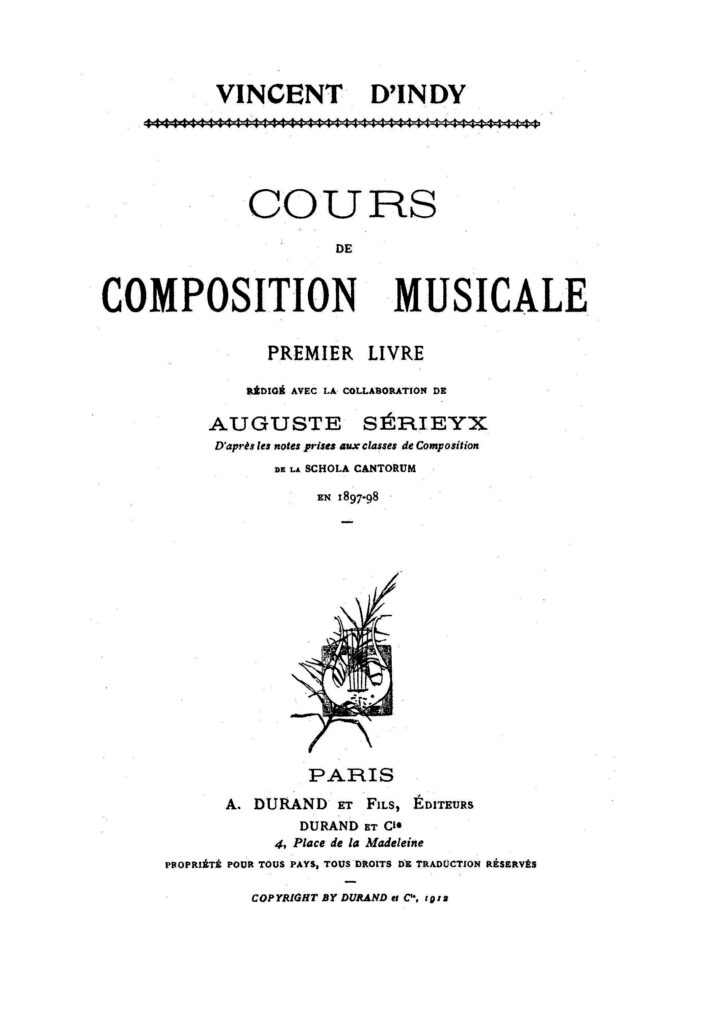
BF-001 – Vincent d’Indy’s Cours de Composition – Book 1
BF-002 – Vincent d’Indy’s Cours de Composition – Book 2
BF-003 – César Franck by Charles Tournemire
BF-004 – César Franck by Vincent d’Indy
BF-005 – La Musique de Chambre de César Franck by Robert Jardillier
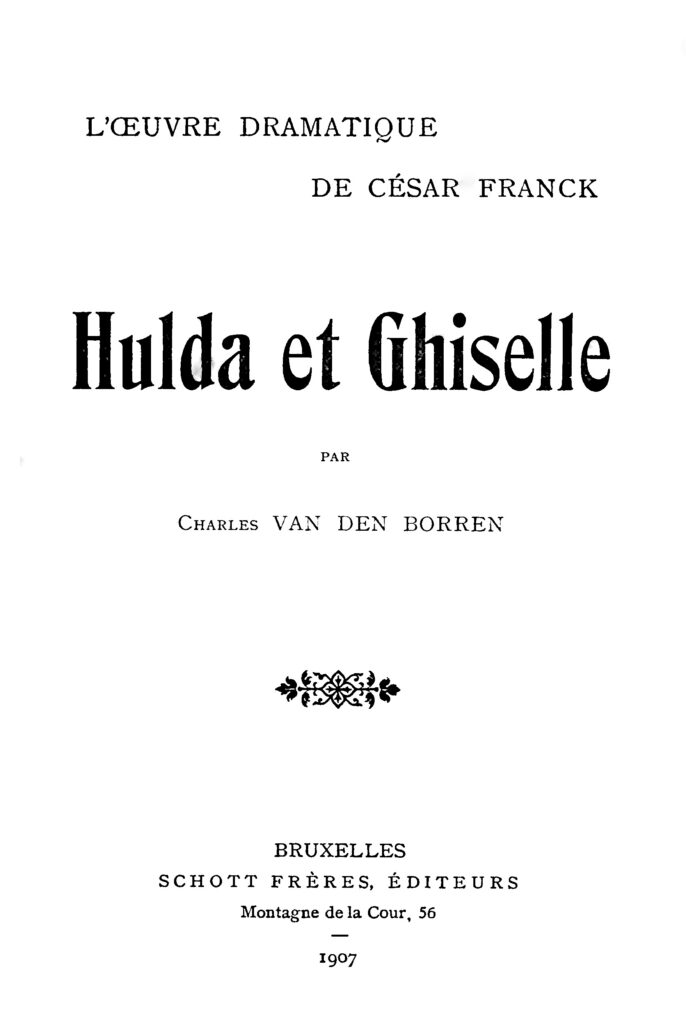
BF-006 – Hulda et Ghiselle by Charles Van Den Borren
BF-007 – Une École de Musique by Vincent d’Indy
BF-008 – Notations Artistiques by Joseph Guy Ropartz
BF-009 – Demuth – César Franck
BF-010 – Beethoven by d’Indy
BF-011 – Les idees de Vincent d’Indy by Saint-Saens
BF-012 – Destranges, Etienne – Fervaal de Vincent d’Indy
BF-013 – Destranges, Etienne – Le Chant de la Cloche de Vincent d’Indy
BF-014 – Le parnasse Breton contemporain (Louis Tiercelin and J. Guy Ropartz)
BF-015 – Vincent d’Indy – Louis Borgex
Videos
Appendix
MP-001 – Short Piano Pieces
Bach, Debussy, Franck, Granados,
Handel, Joplin, Satie, and
keyboard compositions of the
16th and 17th centuries.
MP-002 – The Organ Book
Bach, Franck, Pacabel, Reinberger,
Widor