In March, 1997, Mary Ellen Bickford and I established our two educational projects DoveSong.com and Musical Kaleidoscope – the fruit of ideas that we had first initiated during 1980. The iUniversity section of DoveSong.com was then announced in November 2011, with publications to be made available beginning in 2012. The goal of the iUniversity is to help create a new direction in classical music by providing study scores based on a revolutionary technique of color-coding and analysis that I developed to arm the next generation of composers with the tools they will need to create the 21st century’s classical music.”
Learning from the World’s Greatest Rhythmic Traditions
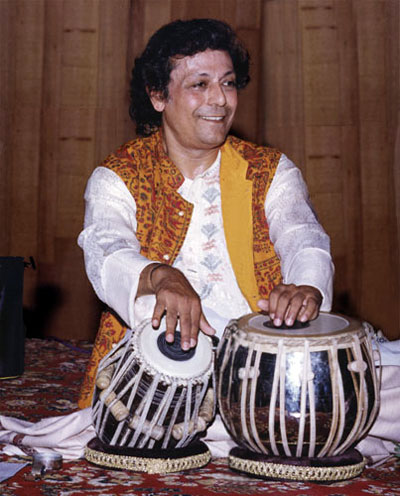
Pandit Swapan Chaudhuri Playing Tabla
The Study of Rhythm
Learning from the Masters
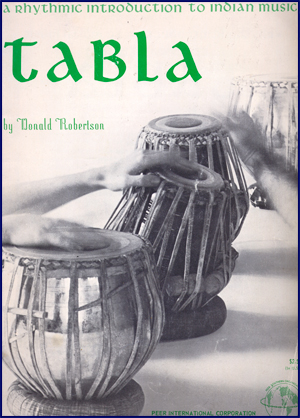
The Western world's first tabla instruction book was written by Don Robertson in 1968.
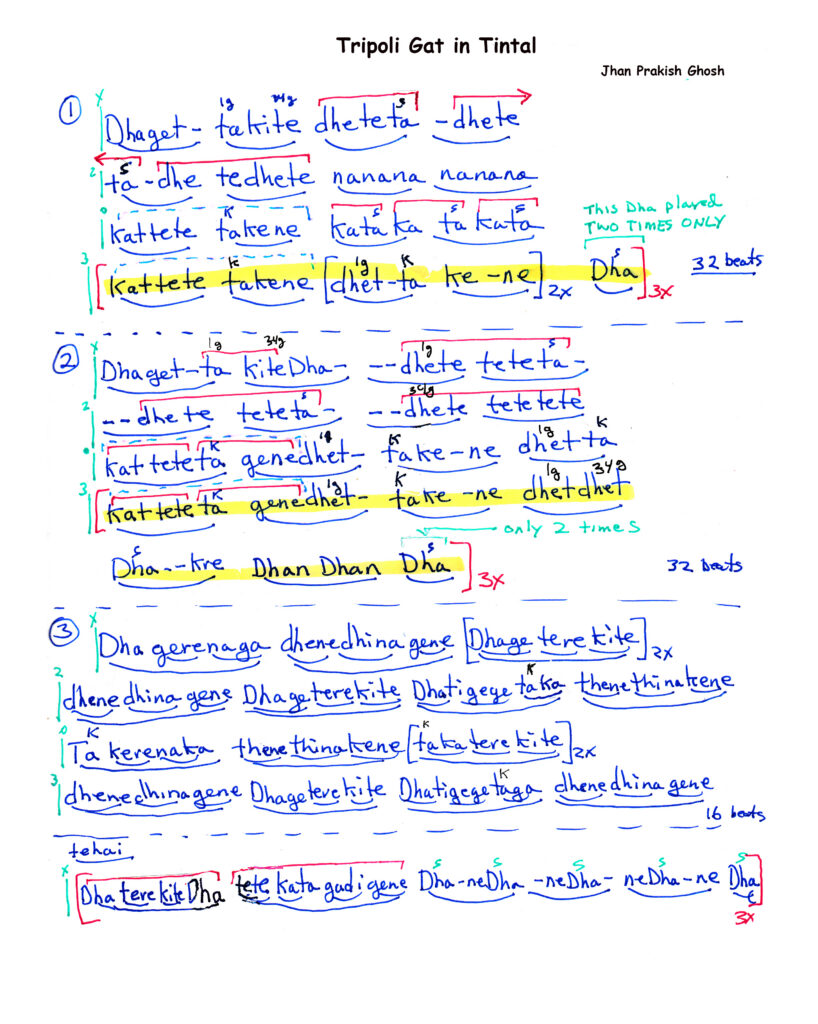
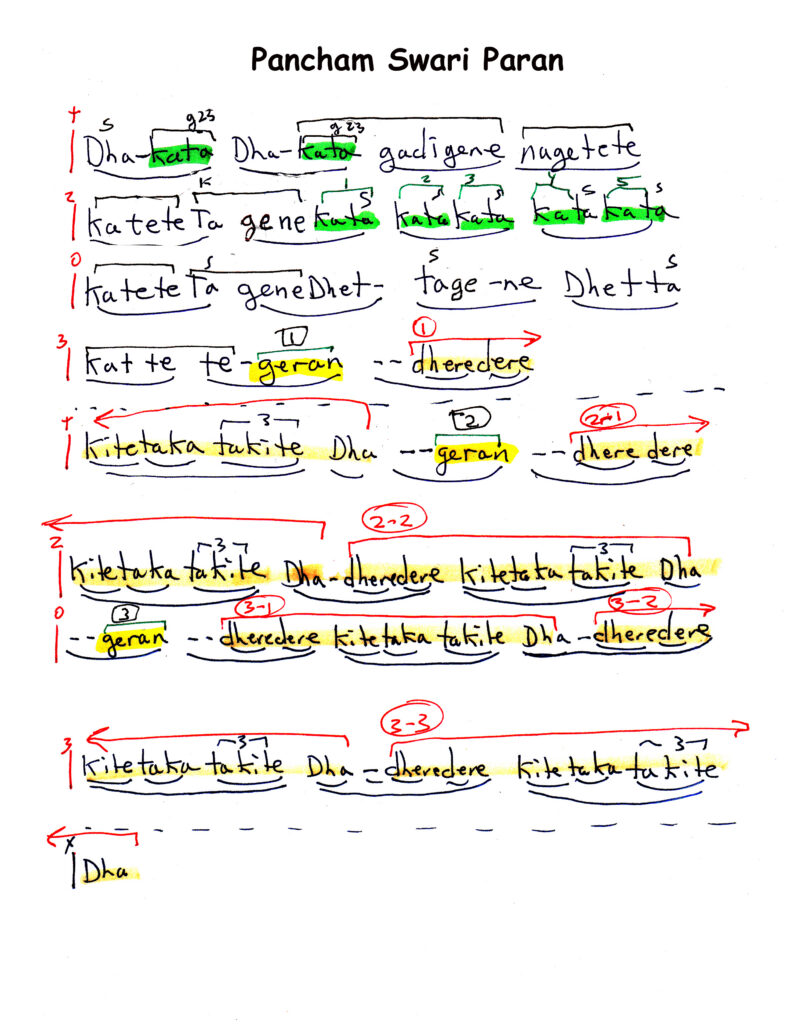
I wrote the first tabla instruction book that was published in the west in 1968 for the Peer-Southern Music Corporation in New York City. It was the companion for Harihar Rao’s sitar book. Since then, I have continued to study tabla and practice on a daily basis. My love for the composed tabla literature and for the rhythmic music produced by this drum and the musicians of genius that are a part of its legacy is boundless. It has been the ultimate teacher for me for the use of rhythm in music. My wish for the iUniversity is not to help players learn to play the instrument, as there are many other teachers for that, but to pass on to the young composers of the 21st century – uninterested in the complications and confusion inherited from 20th century classical music – this great rhythmic classical music tradition. The language of the tabla and pakhawaj is all that one needs to learn in order to recite the compositions of genius that I have collected over the past 45 years.
About NIC and specifically these two drumming traditions. How the players accompany vocal and instrumental artists and there is a powerful solo tradition.
About the language of these drums. Both use the same language and pakhawaj pieces can be performed on the tabla.
Section One
The Pakhawaj
The Pakhawaj: An Ancient and Important Rhythmic Art from India
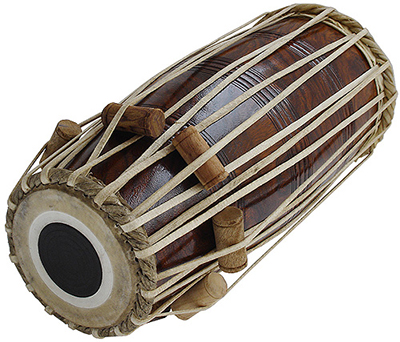
The pakhavaj is a barrel-shaped, two-headed drum, originating from the Indian subcontinent, the oldest version of double sided drums and its descendants are mridangam of Southern India and kendang of Maritime Southeast Asia and other South Asian double-headed drums. Its older forms were made with clay. It is the percussion instrument most commonly used in the dhrupad style of Indian classical music and less often used as a rhythm accompaniment for various other sub-forms of music and dance performances (e.g. kathak, odissi, marathi). It has a low, mellow tone that is quite rich in harmonics.
The sides of the pakhawaj are made with animal skin (often goat, cow skin). The pakhavaj players place the instrument horizontally in front of themselves as they sit on the floor with legs crossed. The players may sometimes place a cushion under the narrower treble face to lift it slightly. A right-handed person places the larger bass-skin on the left side and the treble skin on the right. The bass face tends to be smeared with some fresh wheat dough which acts as the kiran and gives a vivid bass sound to the pakhavaj. The tuning of Pakhavaj is similar to that of the tabla – with the wooden wedges placed under the tautening straps. Due to the varied thickness of the skin that covers the treble face, the treble face can produce at least two tones that are a semitone apart. For example, if hitting the centre (the bol दिन din) is tuned to produce the note C then hitting closer to the edge (with the bol ता for example) could produce the note C#. The fine tuning can be done with the woven outer ring (गजरा – gajra) which is an extension of the skin that the face is made of. It is only on the bass skin where a freshly made batter (or dough) of (wheat) flour and water is applied to provide enhance the low-pitched sound. While the options to use a polymer-based substitute are available but are not commonly used. (Wikipedia)
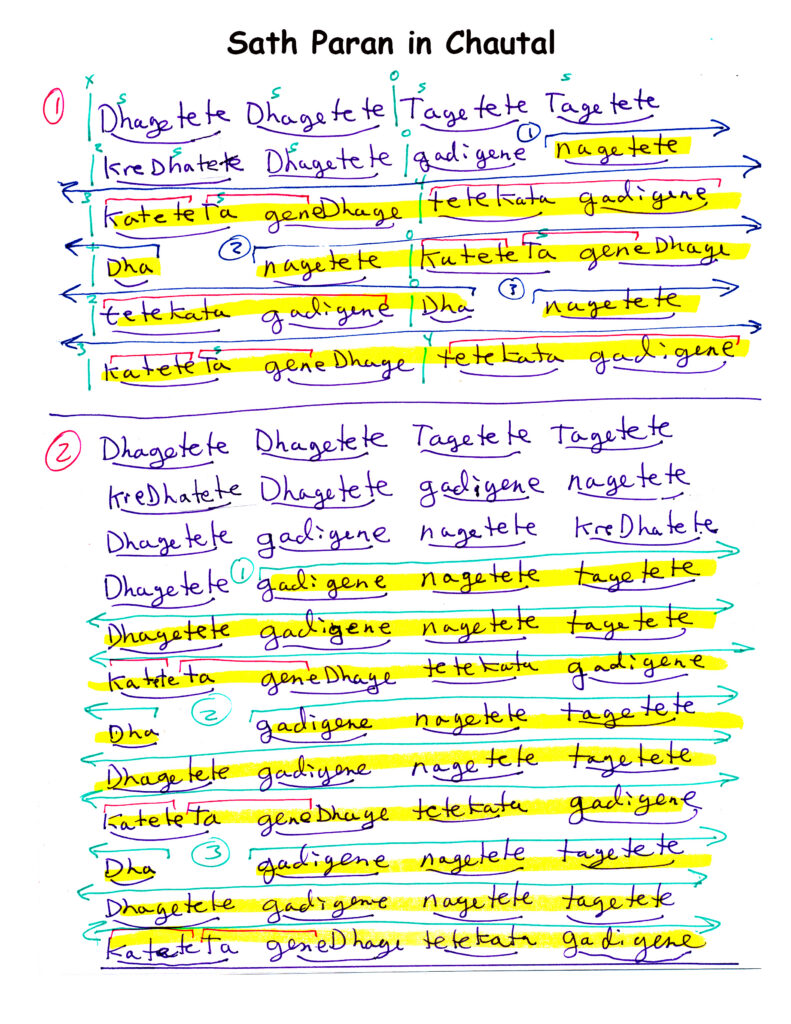
Sath Paran in Chautal - Page One
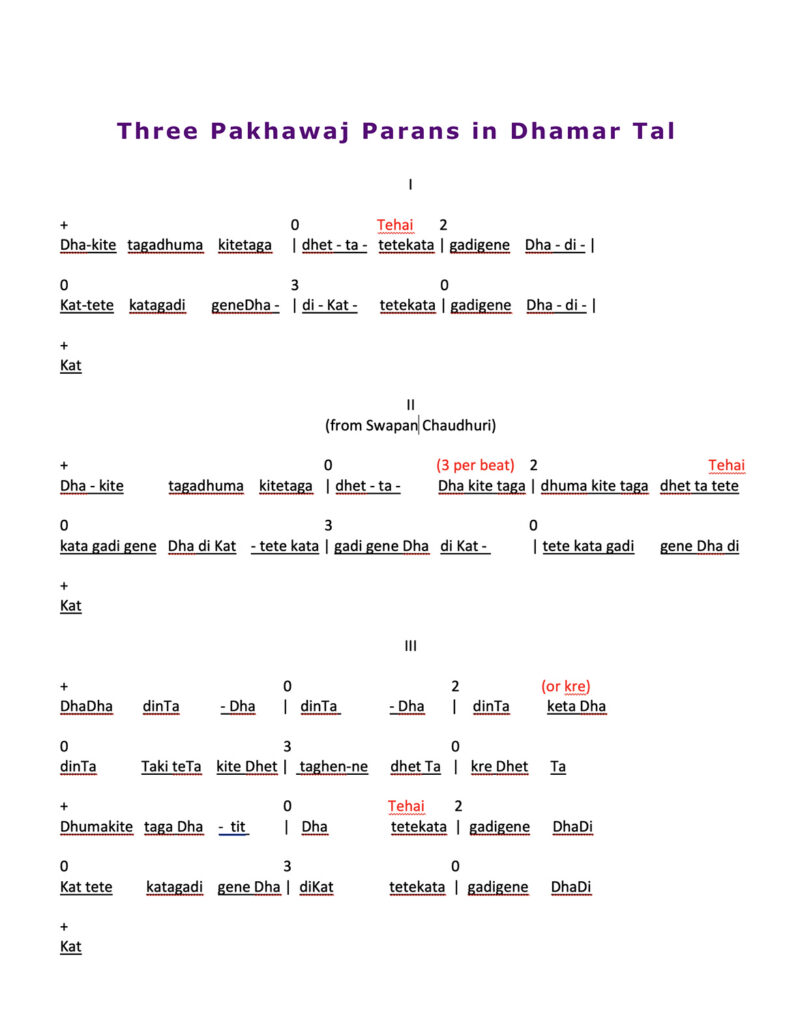
Three Parans in Dharmar Tal
Section Two
The Tabla
The Pakhawaj: An Ancient and Important Rhythmic Art from India
A tabla is a pair of hand drums from the Indian subcontinent, that is somewhat similar in shape to the bongos. Since the 18th century, it has been the principal percussion instrument in Hindustani classical music, where it may be played solo, as an accompaniment with other instruments and vocals, and as a part of larger ensembles. It is frequently played in popular and folk music performances in India, Bangladesh, Afghanistan, Pakistan, Nepal and Sri Lanka.
The tabla is an essential instrument in the bhakti devotional traditions of Hinduism and Sikhism, such as during bhajan and kirtan singing. It is one of the main qawali instruments used by Sufi musicians. The instrument is also featured in dance performances such as Kathak. Tabla is a rhythmic instrument. The name tabla likely comes from tabl, the Arabic word for drum. The ultimate origin of the musical instrument is contested by scholars, though some trace its evolution from indigenous musical instruments of the Indian subcontinent. The tabla consists of two small drums of slightly different sizes and shapes. Each drum is made of hollowed-out wood, clay or metal. The smaller drum (dayan/tabla) is used for creating treble and tonal sounds, while the primary function of the larger drum (baya/dagga) is for producing bass. They are laced with hoops, thongs and wooden dowels on its sides. The dowels and hoops are used to tighten the tension of the membranes for tuning the drums. The playing technique is complex and involves extensive use of the fingers and palms in various configurations to create a wide variety of different sounds and rhythms, reflected in mnemonic syllables (bol). (Wikipedia)
Pandit Swapan Chaudhuri teaching Don Robertson “gat” (pronounced “gut”) compositions in the 1990s.
Don Robertson demonstrating how the Indian drumming language is applied to performance.